Portfolio Vs. Product management – What’s the Difference?

What Is Product Management?
Product management is the strategic role responsible for the market success of a particular product, often from concept through the product’s lifecycle.
In most companies, a Product Manager’s job will include market research, creating user personas for the products the company plans to build, analyzing and prioritizing ideas for features and functionality, and coordinating with several departments (development, marketing, sales, etc.) to give the product the best chances of success in the market.
What Is Product Portfolio Management?
Although they might be responsible for more than one product, Product Managers typically do not earn the title Product Portfolio Manager unless they oversee an entire portfolio of products within an organization.
Product portfolio management, a job that typically exists only in larger enterprises, describes the role responsible for both the success of a portfolio of products and managing all individual Product Managers who are responsible for the specific products within the portfolio.
Portfolio Management vs. Product Management: Key Differences
As you might have noticed from the descriptions above, there are two significant differences between these roles.
1. Product Portfolio Managers have direct reports.
Product Managers have the strange distinction of owning ultimate responsibility for a product’s market success or failure but not having organizational authority over any of the people (in sales, marketing, development, customer success, etc.) whose help they need to pull off those market successes.
A Product Portfolio Manager, by contrast, does have direct reports — specifically, the group of Product Managers overseeing each of the portfolio’s individual products.
This distinction makes product portfolio management more of a managerial position than a product-focused role. And that brings us to the second key distinction.
2. Product vs portfolio management focus: Business objectives vs. product features.
Because they have responsibility for a far larger portion of an organization’s product line than any individual Product Manager, Product Portfolio Managers tend to focus more on more wide-reaching business issues.
For example, a Product Portfolio Manager might focus more on marketing, overseeing the portfolio’s budget, looking for synergies between teams across the portfolio, and watching out for cross-product-line dependencies that individual Product Managers might not have the portfolio-wide visibility to see.
Note: In many organizations, product portfolio management is also called portfolio management. (Product teams are very busy, and saving a syllable here and there makes a difference.) But we prefer to use the full name every time because portfolio management can confuse people by conjuring up an image of the financial services firms managing your money.
Which Companies Need a Product Portfolio Manager?
While product portfolio management roles are common in large enterprises with complex development schedules, the portfolio management product mindset is valuable for teams of any size. Large organizations require a product portfolio manager to find economies of scale and manage many moving parts, but the core principles apply across the board.
Why Small Companies Should Care About Managing a Product Portfolio
Even without a dedicated role, mastering the skills involved in managing a product portfolio is a vital asset for any organization. These capabilities allow teams to move beyond individual product silos and focus on the health of the entire business.
- Identify Market Gaps: Spot holes in your current product line that competitors might fill.
- Share Resources: Efficiently distribute talent and tools across teams to benefit multiple products simultaneously.
- Find Synergies: Uncover opportunities to share resources and knowledge across the organization to achieve better economies of scale.
What are the benefits of product portfolio management?
Another reason that product portfolio management skills and mindset can be beneficial to an organization is that the Product Portfolio Manager needs to take an objective view of the health of each product in the portfolio at all times. This is something individual Product Managers might have a more difficult time with, because they are so closely connected with the product they oversee.
The Power of an Objective Perspective
Individual Product Managers can find it difficult to stay objective because they are so closely connected to the products they oversee. This is where managing a product portfolio becomes a superpower:
- Lifecycle Awareness: A Portfolio Manager can identify when a product is underperforming or in a decline phase, suggesting it’s time for an “end-of-life” transition rather than wasting resources on new features.
- Resource Protection: While a PM might fight to keep a product alive with more funding, a Portfolio Manager recognizes when those limited resources would be better spent elsewhere.
Whereas an individual Product Manager might prefer to fight to keep the product on the market longer — and even request additional funding to try building new functionality — a Product Portfolio Manager will be more likely to realize beforehand that this would be a waste of limited resources.
Key Organizational Advantages of Portfolio Management vs Product Management
Whether you have an official Product Portfolio Manager or just apply the mindset, your organization gains several strategic advantages:
- A more balanced approach to allocating resources strategically across the entire portfolio in ways most likely to achieve the company’s business objectives.
- A wider-angle view of the portfolio that can uncover opportunities for collaboration and cross-team synergies, and even spot cross-product-line dependencies that need to be addressed.
- A more flexible approach to the plans and priorities of each product based on its unique performance, opportunities, and risk.
Expert Insights on What Is Product Portfolio Management Value
Online community The Product Manager says product portfolio management is invaluable in that it helps organizations by:
- Identifying which products are currently in high demand.
- Identifying which products are underperforming or situated in unattractive markets.
- Identifying which products may benefit from an improvement or rebranding based on market promise.
- Identifying where resources should be invested based on the promise of innovative products.
- Linking communication across all departments involved in the supply chain.
- Linking the production and development of products to an overall business strategy
How Do You Move from Product Manager to Product Portfolio Manager?
Moving up the product management ladder always requires work and preparation. A transition from Product Manager to Product Portfolio Manager can represent a natural progression in your career. But you will need to be able to demonstrate some specific accomplishments and skills beyond those of the typical product management role. Here are a few examples of those skills and why you’ll need them:
The ability to conceptualize and plan a cross-product-line strategy.
You’ll be responsible for not just one or a few products but an entire portfolio, and you’ll need to understand how to coordinate the efforts and objectives among the entire portfolio for the best possible business outcome.
A deep understanding of budgeting.
You’ll need to allocate limited resources across different products and teams.
Excellent communication skills.
You’ll be communicating with higher-level colleagues, including your C-suite executives, and you might even be called on for thought-leadership speaking engagements at conferences or on webinars.
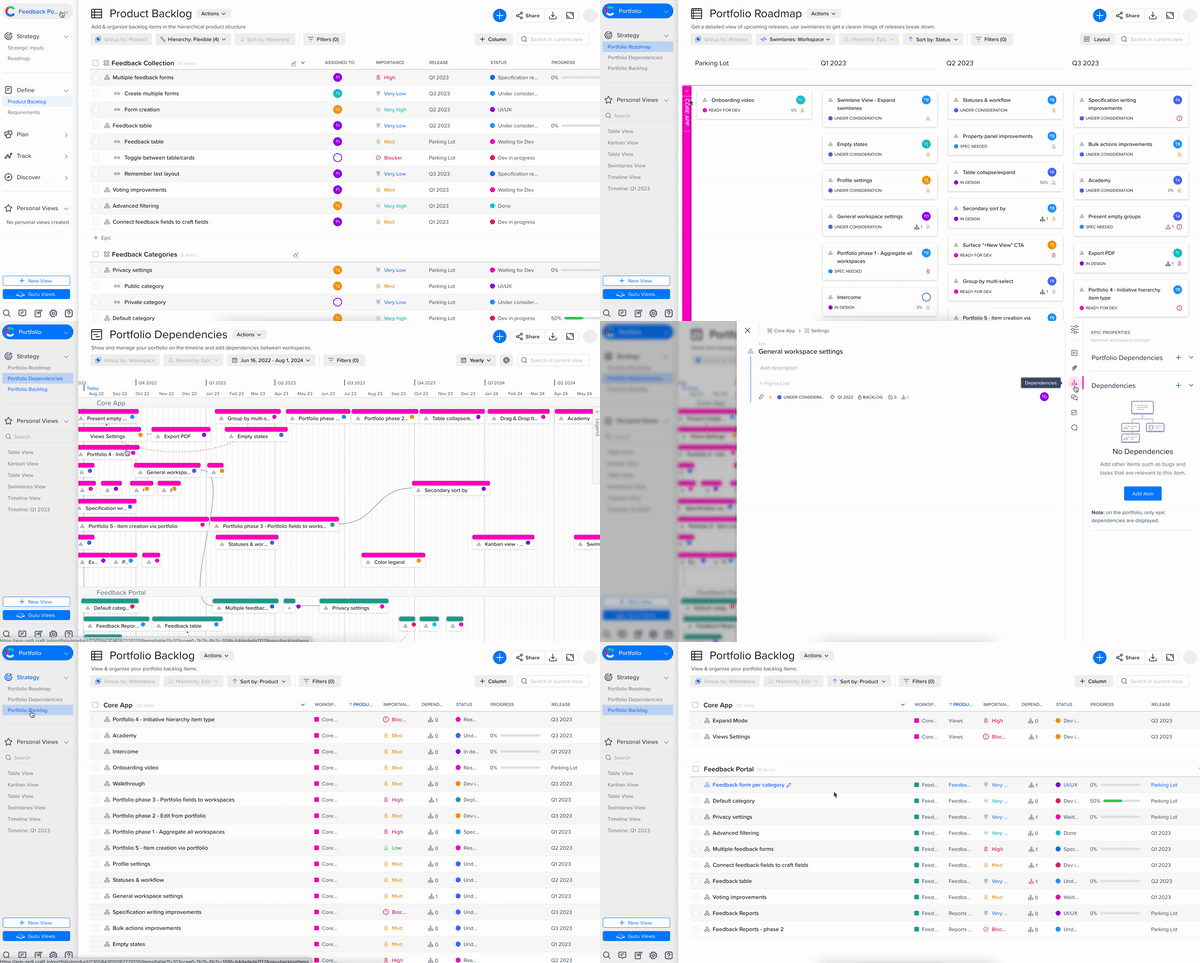
We at craft.io wish you well in your continued product management success! And if you’re looking for tools to help you advance in your career, take a free test drive of our end-to-end product management platform — which includes Product Portfolio Management.
Try Craft now – get a Free Trial
craft.io’s Product Management Platform has been specifically designed to streamline the planning process and help product managers make better product decisions as a result. Try it out right now with a 14-day free trial or book a personal live demo with one of our product experts.
If you’re looking to make smart product decisions, align your team, and tell a compelling product story sign up for a free trial of craft.io, the end-to-end product management platform with best practices built-in. Or better yet, book a demo with a Product Executive to walk you through it.
FAQ
What is the difference between portfolio management vs product management?
Product management is the tactical success of one product. Product portfolio management is the strategic oversight of a product group and the managers who lead them.
What are the primary responsibilities of a product portfolio manager?
They focus on high-level business goals, budget allocation, and finding synergies across different product lines to ensure the entire portfolio is profitable.
Why is managing a product portfolio important for small companies?
It helps small teams spot market gaps and share resources efficiently, ensuring every individual product supports the company’s long-term business strategy.