The Strategic Bridge: Why Integrating Craft.io with Jira is the Ultimate Power Move for Product Leaders

The “Execution Trap”: Why Great Strategies Fail in the Backlog
In the modern SaaS landscape, “velocity” is often mistaken for “progress.” Many product organizations fall into the Execution Trap: they are incredibly efficient at shipping features in Jira, but those features fail to move the needle on business KPIs.
The disconnect usually happens in the “Air Gap” between the Product Manager’s strategic roadmap and the Developer’s sprint backlog. Jira is a world-class engine for execution, but it wasn’t designed to be a strategic brain. When PMs try to force strategy into Jira, it becomes a cluttered mess of labels and custom fields. When they keep strategy in slide decks, it becomes outdated the moment it’s saved.
The Craft.io + Jira integration is the bridge over this gap. It allows your organization to maintain a “Dual-Track” system: Strategic Discovery in Craft.io and Tactical Execution in Jira.
1. Elevating Jira from a Task Tracker to a Value Driver
For a Product Manager, Jira can feel like a “black hole” of tickets. Without a strategic layer, it’s difficult to see how a bug fix or a minor UI tweak contributes to the quarterly OKRs.
By integrating Craft.io, you create Strategic Traceability.
- The “Why” stays with the “What”: When a developer opens a ticket in Jira, they can see the strategic context pulled from Craft.io. They aren’t just “coding a button”; they are “increasing conversion for the Enterprise segment.”
- Contextual Prioritization: Instead of prioritizing based on “who is loudest,” Craft.io allows you to use frameworks like RICE (Reach, Impact, Confidence, Effort) or MoSCoW. These scores sync to Jira, giving the engineering team a clear understanding of the business value behind every task.
2. Real-Time Roadmapping: The End of “Status Update” Meetings
One of the biggest time-sinks for Product Leaders is the manual creation of roadmap presentations. By the time the slide deck is finished, the engineering team has already changed three priorities.
The Craft.io integration utilizes automated webhooks. This means:
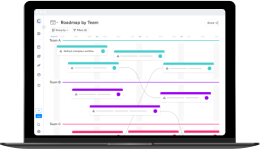
- Live Progress Tracking: As developers move tickets from “In Progress” to “Done” in Jira, the progress bar on your high-level roadmap in Craft.io moves automatically.
- Stakeholder Transparency: Executives can log into Craft.io and see exactly where a major initiative stands without ever needing to ping a PM or navigate the complexities of Jira.
- Predictive Planning: By syncing story points and velocity data, Craft.io helps you predict release dates with much higher accuracy, reducing the risk of over-promising to sales or customers.
3. Creating a Feedback Loop That Actually Works
The most successful products are built on customer insights, but these insights often get lost during the handoff to engineering.
With Craft.io’s Feedback Portal, you can collect requests from customers and internal teams. The integration allows you to link these feedback items directly to Jira Epics.
- The Full Circle: When the code is shipped in Jira, the PM is notified in Craft.io, and the customer who requested the feature can be updated automatically. This creates a “Customer-Obsessed” culture that drives retention and loyalty.
Moving Toward a Mature Product Operating Model
Integrating your tools is about more than just data—it’s about Product Culture. It signals to your team that strategy matters just as much as speed. It empowers PMs to spend less time on manual data entry and more time on high-value discovery.
Ready to Build with Purpose?
Setting up the connection is a “low-lift, high-reward” activity for any Workspace Admin.
- Step 1: Connect via Workspace Settings > Integrations.
- Step 2: Map your hierarchy (Initiatives to Epics, Features to Stories).
- Step 3: Watch your roadmap come to life with real-time data.
For a deep dive into the technical mapping and field synchronization, visit our Jira Integration Command Center.
Stop guessing and start growing. Connect Jira to Craft.io today.

FAQ: Craft.io + Jira Integration
Does this integration support both Jira Cloud and Jira Data Center?
Yes. Craft.io is built to support the full spectrum of the Atlassian ecosystem. Whether your engineering team operates on Jira Cloud, Next-Gen projects, or self-hosted Jira Data Center/Server instances, the integration provides the same robust bidirectional syncing capabilities.
How does "Bidirectional Sync" actually work?
Bidirectional sync ensures that a change in one platform is reflected in the other. For example, if a Product Manager updates a feature description or priority score in Craft.io, that change can be pushed to the Jira ticket. Conversely, when a developer moves a story from “In Progress” to “Done” in Jira, the status and progress bars in Craft.io update automatically via webhooks.
Will integrating Craft.io mess up my existing Jira workflows?
Not at all. Craft.io is designed to sit on top of Jira as a strategic layer, not to replace it. You can map Craft.io states to your existing Jira workflow statuses (e.g., mapping “Discovery” in Craft.io to “To Do” in Jira). This allows engineers to keep their current processes while giving PMs a cleaner, more strategic view.
Can I prioritize Jira tickets within Craft.io?
This is one of the integration’s strongest features. You can import your Jira backlog into Craft.io, apply objective frameworks like RICE, WSJF, or MoSCoW, and then sync those priority scores back to Jira. This ensures the engineering team is always working on the highest-impact items.
Is my data secure?
Absolutely. Craft.io uses industry-standard encryption and secure API authentication (OAuth 2.0 or API Tokens) to connect with Jira. We do not alter your Jira security settings, and the integration respects all existing user permissions within your Atlassian environment.