How to Build an Agile Roadmap Your Whole Team Will Actually Follow
Why Agile Roadmaps Fail (and How to Fix Them)
Most agile teams have a roadmap. Far fewer have one that the team actually follows. The gap is usually structural: the roadmap was built for a presentation, not for daily planning. It shows features and rough timelines, but nothing that connects to sprint work. When priorities shift, the roadmap stays frozen while the backlog moves on.
An agile roadmap that works is built differently. It captures direction without locking in detail, updates as priorities change, and ties directly to the delivery process so engineers and stakeholders are looking at the same picture. The sections below cover how to build one and how to keep it alive through a real agile cycle.
How to Structure an Agile Roadmap
A useful agile roadmap works at the theme or outcome level, not the feature level. When you plan feature by feature, every priority shift breaks the roadmap. When you plan by themes or goals, the roadmap absorbs change more gracefully because individual features can shift inside a theme without invalidating the whole plan.
A practical structure has three layers:
- Strategic goals or OKRs at the top. Each column or swim lane maps to an outcome the team is working toward. This is what leadership cares about.
- Themes or epics in the middle. Groups of work that serve each goal. This is the level where product managers spend most of their time prioritizing.
- Items or stories at the bottom. Specific pieces of work that roll up into themes. These should be loosely defined beyond the next one or two sprints.
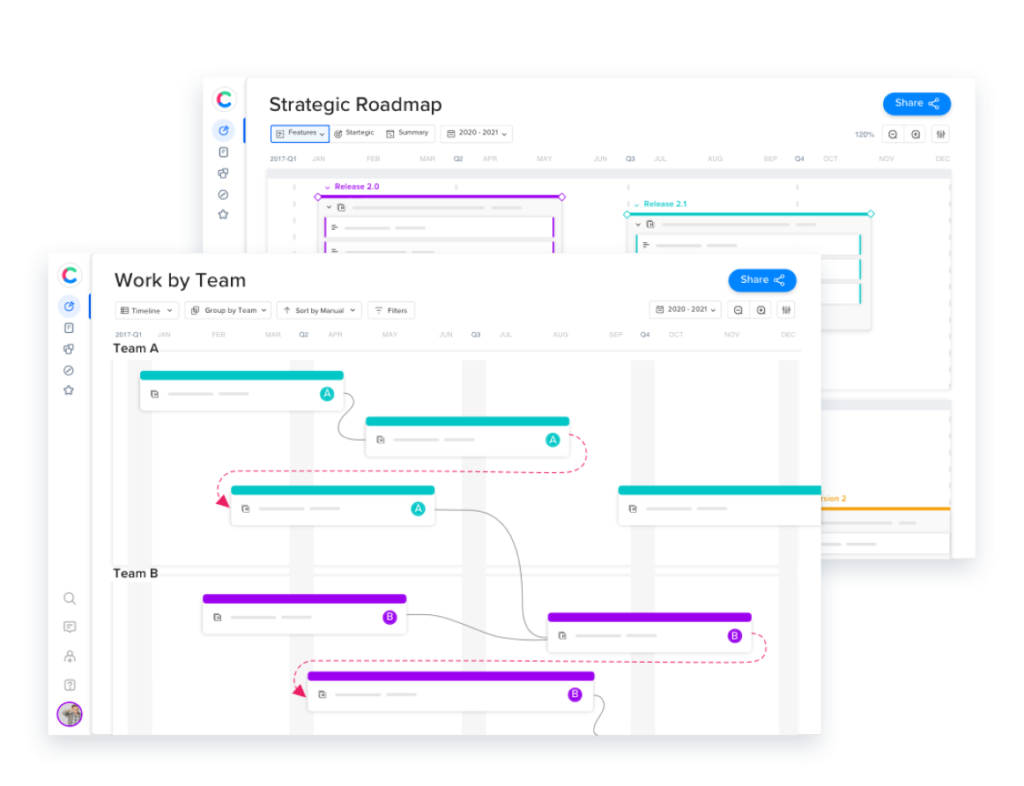
Craft.io supports this kind of structure through its timeline and swimlane views. Swimlanes let you organize items by team, theme, or goal across a shared timeline so every stakeholder sees work organized the way they think about it, not just as a flat list.
Keep the roadmap at a coarser grain the further out you go. Near-term quarters deserve detail. Anything six months out should show intent, not commitment. This keeps the roadmap honest and spares you from constant revision as reality changes.
Keeping the Roadmap Current as Priorities Shift
The most common failure mode is not a bad roadmap at the start. It is a roadmap that stops being updated after the first sprint review. When the roadmap falls behind reality, teams stop trusting it, stop consulting it, and stop updating it. The decay compounds.
A few practices break that cycle:
- Review the roadmap at the start of every sprint planning session. Not a full rewrite, just a check: does what is on the timeline still reflect what the team is actually building?
- Separate the roadmap from the backlog, but keep them linked. The roadmap shows direction over weeks and quarters. The backlog shows the work for the current sprint. Both need to exist, and both need to point at the same goals.
- Update themes before features. If a strategic priority shifts, update the theme first. Let the feature-level work follow. This stops you from making dozens of small edits when one structural change covers them all.
- Assign one owner. The roadmap should have a single person responsible for keeping it current. In practice this is usually the product manager. Shared ownership with no named owner means no one updates it.
Craft.io’s Actual vs Planned feature gives product managers a way to track how delivery compares to the roadmap over time. Having that record helps teams get better at estimating and gives leadership an honest picture of how planning is going.
What to Look for in an Agile Roadmap Tool
Not every roadmap tool fits an agile process. Some are built for presenting a fixed plan to stakeholders, not for managing a living document through rapid cycles. When you are evaluating product roadmap software for an agile team, look for these things:
- Multiple views on the same data. Your engineering lead needs a different view than your CEO. A good agile roadmap tool lets you configure views without maintaining separate files.
- Timeline and swimlane support. Swimlanes let you show parallel workstreams, which is how agile teams actually work. A flat Gantt is not enough.
- Integration with delivery tools. If the roadmap and the sprint board live in completely separate systems with no connection between them, the roadmap will drift. Look for tools that connect to Jira or similar platforms so planning and delivery stay aligned.
- Prioritization built in. An agile roadmap is only as good as the prioritization decisions behind it. The tool should help you score and rank items, not just display them.
- Feedback collection tied to the roadmap. Feature requests and customer feedback should inform what goes on the roadmap. A tool that connects feedback to roadmap items makes that workflow less manual.
Craft.io is built as a product management platform, which means roadmapping is not an isolated module. It connects to prioritization, feedback management, OKRs, and delivery through integrations, so the roadmap reflects actual product decisions rather than a copy-pasted slide deck.
Getting the Team to Actually Follow the Roadmap
Alignment is not automatic. Even a well-structured roadmap gets ignored if the team was not involved in building it or does not understand why items are ordered the way they are. A few habits make a difference:
- Show the reasoning, not just the result. When engineers and designers understand why something is prioritized, they can make better trade-offs during implementation. The roadmap should carry enough context that the reasoning is visible.
- Review it in sprint ceremonies, not just in all-hands. If the roadmap only comes out for leadership updates, the team treats it as a communication artifact, not a working tool. Bringing it into sprint planning and retrospectives makes it part of daily decisions.
- Let the team flag conflicts. When sprint work diverges from the roadmap, that is signal, not failure. Teams that surface the gap quickly can resolve it before it compounds.
For more on agile product management practices, the craft.io guide to agile product management covers the broader process, and the roadmap feature overview shows how the platform supports these workflows in practice.