Product Ops Software: What It Is and How to Choose the Right Platform

Product operations is the function that keeps product teams running efficiently at scale. When your organization has multiple product managers, several product lines, and a growing backlog of strategic decisions, ad-hoc coordination stops working. Product ops software gives the people managing that function a single place to standardize how product work gets done, track what's happening across the portfolio, and make sure strategy connects to execution.
Without dedicated tooling, product ops leads spend their time chasing status updates, reformatting roadmaps for different audiences, and trying to figure out which teams are blocked. That coordination overhead pulls focus away from the higher-value work: setting process standards, improving how the organization makes prioritization decisions, and giving leadership the visibility they need.
Good product ops software reduces that overhead. It creates consistency without adding bureaucracy, and it surfaces the information stakeholders need without requiring product managers to stop building in order to report on building.
What to Look for in a Product Ops Platform
Not every product management tool is built with product ops in mind. A tool designed for a single product manager working alone looks very different from a platform that can support a product ops lead overseeing ten teams. When you are evaluating options, these are the capabilities that matter most for the product ops use case:
- Portfolio visibility. You need a way to see the health and progress of multiple products in one view, not just a single team's backlog. Look for enterprise portfolio and portfolio management features that roll up work across teams.
- Standardized process templates. If every product manager builds their roadmap, writes specs, and tracks priorities differently, you cannot compare them or report on them. The platform should make it easy to apply consistent structures across the organization.
- Strategy-to-execution traceability. Product ops exists partly to make sure work happening at the team level connects back to company strategy. Features like OKR tracking and roadmap views that link features to strategic objectives help you audit that connection without manual reporting.
- Feedback and idea management. Collecting and prioritizing feature requests from customers and internal stakeholders is core to product ops. The platform should support structured feedback intake, not just a shared inbox.
- Capacity planning. Understanding whether teams have the bandwidth to execute on what has been committed is a product ops responsibility. Capacity planning tools let you catch overcommitment before it becomes a delivery problem.
- Integrations with delivery tools. Product ops does not replace engineering execution, it connects to it. The platform needs to sync with tools like Jira so that what is planned and what is being built stay aligned.
Connecting Strategy to Execution Across Teams
One of the hardest problems at scale is making sure a company's strategic priorities are actually reflected in what product teams are working on week to week. This gap widens when each team manages its roadmap independently, in a spreadsheet or a disconnected tool.
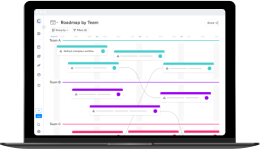
A platform built for product ops lets you set strategic objectives at the top level and then trace how individual features and initiatives roll up to those objectives. craft.io supports this through OKR software and roadmapping capabilities that link work items to strategic goals, so a product ops lead can audit alignment without running a meeting to find out what teams are doing. The Actual vs Planned feature also lets you see where reality has diverged from what was committed, which is exactly the kind of signal a product ops function needs to course-correct early.
For organizations managing more than one product line, the enterprise portfolio view gives leadership a consolidated picture of what all teams are working on, without requiring each team to prepare a separate status report.
Reducing Coordination Overhead on Product Managers
Product managers are most valuable when they are talking to customers, making prioritization calls, and writing clear specs. They are least valuable when they are updating slide decks for stakeholder reviews, hunting down status from engineering, or reformatting the same roadmap four different ways for four different audiences.
Product ops software shifts that coordination overhead off individual PMs by creating shared structures everyone works within. Roadmaps built in craft.io can be shared directly with stakeholders in a view tailored to their needs, without the PM rebuilding the presentation from scratch each time. Feedback collected through the platform feeds into prioritization workflows, so the process of deciding what to build next is documented and repeatable rather than happening in scattered Slack threads.
For product ops leads, this matters because it scales. When the process lives in the tool, onboarding a new product manager means pointing them at the existing workflow rather than explaining it from memory. You can find more detail on how craft.io supports product ops teams specifically on the product ops solutions page.
How to Choose the Right Platform for Your Product Ops Function
The right product ops software depends on where your organization is in building out the function. A team that is formalizing product ops for the first time has different needs than one that already has processes in place and is trying to scale them.
Start by identifying the biggest source of waste: if it is inconsistent roadmap formats, prioritization tooling matters most. If it is poor visibility into portfolio health, start with portfolio management and reporting features. If it is the gap between what leadership thinks is being built and what is actually being built, strategy-to-execution traceability should be the first thing you evaluate.
craft.io is a paid SaaS platform built to support the full product management workflow, from strategy and OKRs through roadmapping, feedback management, prioritization, capacity planning, and delivery integration with Jira. That breadth matters for product ops because it means you are not stitching together separate tools and then managing the gaps between them. If you want to see how it fits your team's workflow, you can book a demo or explore the pricing page to understand the plan options.