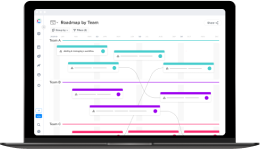
How Payroc Unified Its Product Organization with Craft.io - and Gave Leadership One Trusted View
Connecting requests, priorities, planned work and delivery across a product management function that grew by 600% in four years.
About Payroc
Payroc is a global payment processor serving more than 190,000 clients and processing $125 billion in annual volume. In four years, its product management function grew by 600%, overseeing hundreds of products.
Growth through acquisition spread product work across different teams and ways of working. Without one reliable view of priorities, strategic alignment, and changing plans, executive reporting became a recurring manual exercise.
The transformation
With Craft.io, Payroc connected intake, prioritization, planning with delivery in one operating model – giving teams shared context and leadership a current, trusted view for decision-making, executive standups, and board reporting.
Impact at a glance
- One trusted product view for leadership, supporting executive standups, executive reporting, and board reporting.
- Consistent intake, prioritization, and planning across teams and multiple products, bringing a shared way of working to an organization shaped by acquisitions.
- Eliminating manual effort preparing leadership updates, with priorities, planned work, and progress available from shared product data.
- Clearer accountability as plans change, showing what work remained in-flight, what was added, and what was removed.
- Growing adoption across the product organization, with weekly active use increasing 50% in six weeks.
Payroc’s Growth Created a Visibility Challenge
Payroc’s growth brought new products, teams, and perspectives into the organization. In four years, its product management function expanded by 600%, overseeing hundreds of products across multiple pillars and strategic themes.
That scale created a leadership challenge familiar to many growing enterprises: each area had its own priorities and ways of working, while executives needed to understand the product organization as a whole. What was Product working on now? What was coming next? How did work connect to strategy? And when a new priority emerged, what would it displace?
Answering those questions meant gathering updates from leaders and manually assembling a picture that quickly became outdated. Payroc needed a more reliable way to understand how work connected across teams and how new priorities would affect existing plans.
When I started, there were four or five people in Product. We’ve grown exponentially through acquisition, managing hundreds of products across multiple workspaces feeding six strategic company initiatives.
Casey Conley, Chief Product Officer at Payroc
A Plan to Connect the Entire Product Lifecycle
Payroc’s leadership recognized that a better executive roadmap alone would not solve the underlying problem. The organization needed a connected operating model that followed work from request through delivery—and gave teams and leadership the right context at every stage.
The model was designed around five fundamental questions:
- What and why? Capture what is being requested, the problem behind it, and why it matters.
- Where does it fit? Evaluate the request alongside competing priorities and connect it to strategy.
- Which work enters the plan? Align priorities with capacity and make deliberate decisions about what work to take on.
- When can it be delivered? Turn new ideas, requests, or initiatives into transparent roadmaps for stakeholders and leadership.
- How is it progressing? Maintain visibility as work moves into delivery and plans change.
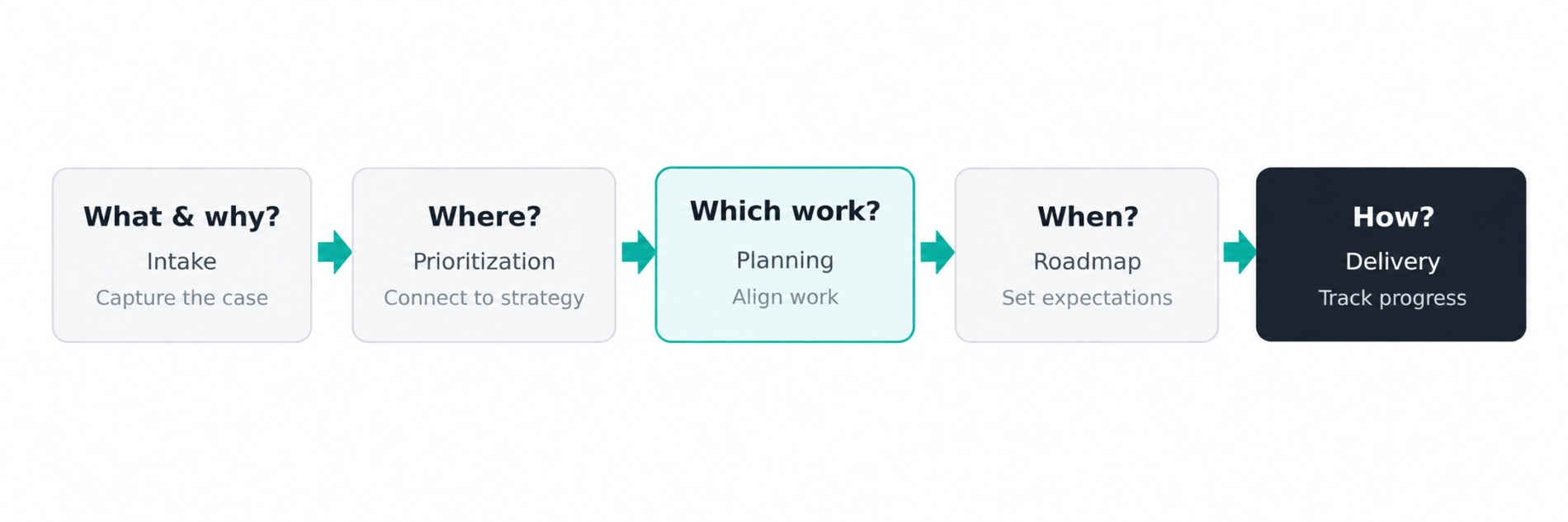
Craft.io would connect those stages in one product-management system, while Jira continued to support Engineering’s execution – creating a continuous line of sight from why work was requested to what was ultimately selected for delivery.
What & Why?
From Incoming Requests to Informed Decisions
Payroc began with the requests entering the product organization. Product managers were receiving ideas and priorities from across the business, often with every request presented as urgent. But inconsistent context made those requests difficult to compare and prioritize.
The key is understanding what we’re being asked for, whether the problem is clearly defined, and why we should invest. There has to be some kind of business justification tied to the request.
Patrick Howard, Vice President of Product Management at Payroc
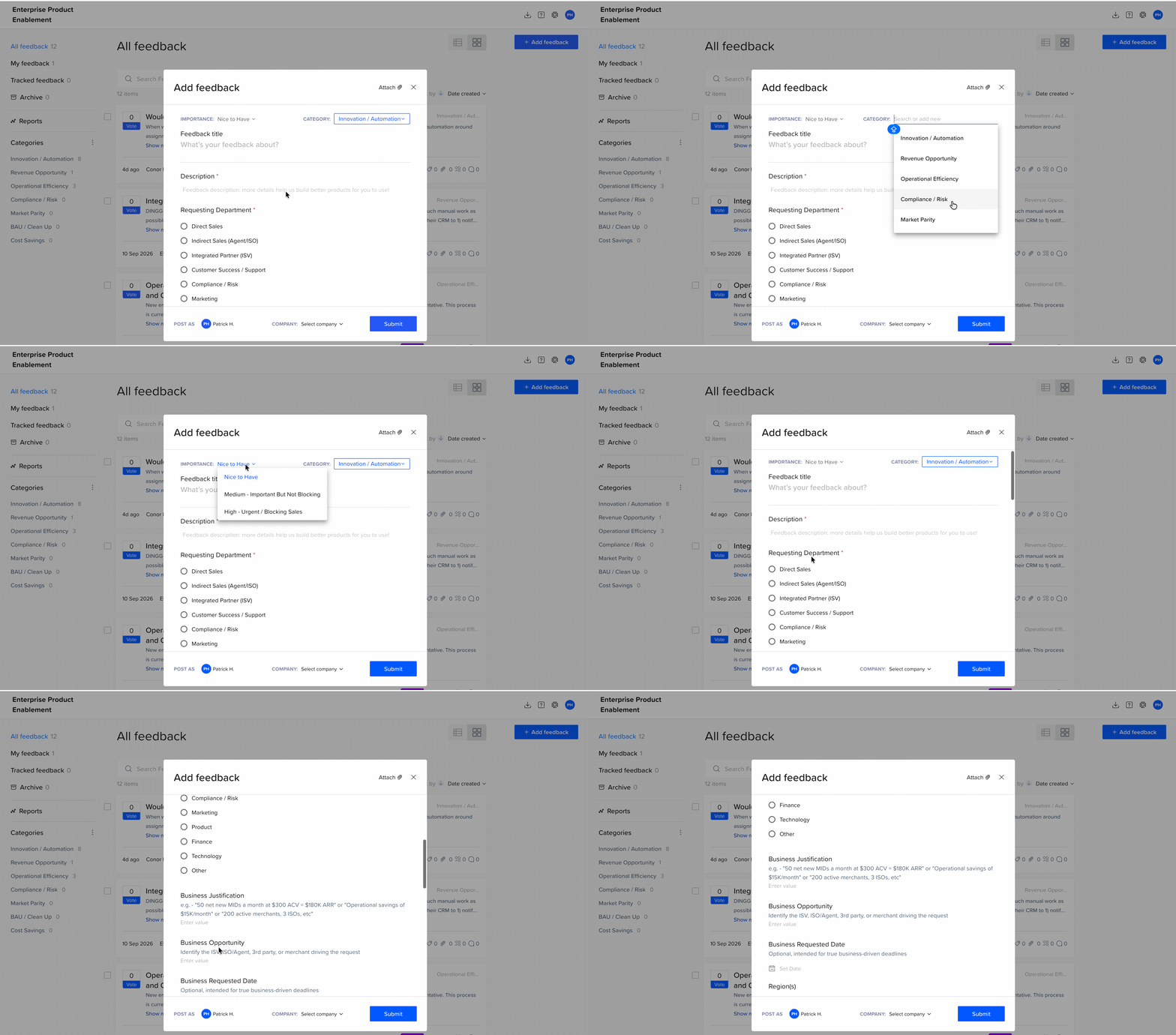
Craft.io’s Feedback Portals give stakeholders a consistent way to submit requests, while standardized intake forms capture the problem, desired outcome, business justification, and objective behind each one. Once a request enters the Craft.io backlog, product managers can connect it to strategic objectives, indicate its importance and priority, and evaluate it alongside competing work.
Payroc’s Feedback Portal captures the business context behind each request before it enters prioritization:
Which Work?
From Priorities to Aligning the Work
With requests understood and prioritized on common terms, Payroc could address the next question: which work could teams realistically take on?
Craft.io’s planning views bring proposed work, product priorities and cross-team dependencies into one place. During PI planning, Product and Engineering can evaluate tradeoffs, surface dependencies, and agree on a realistic set of tasks for the upcoming increment.
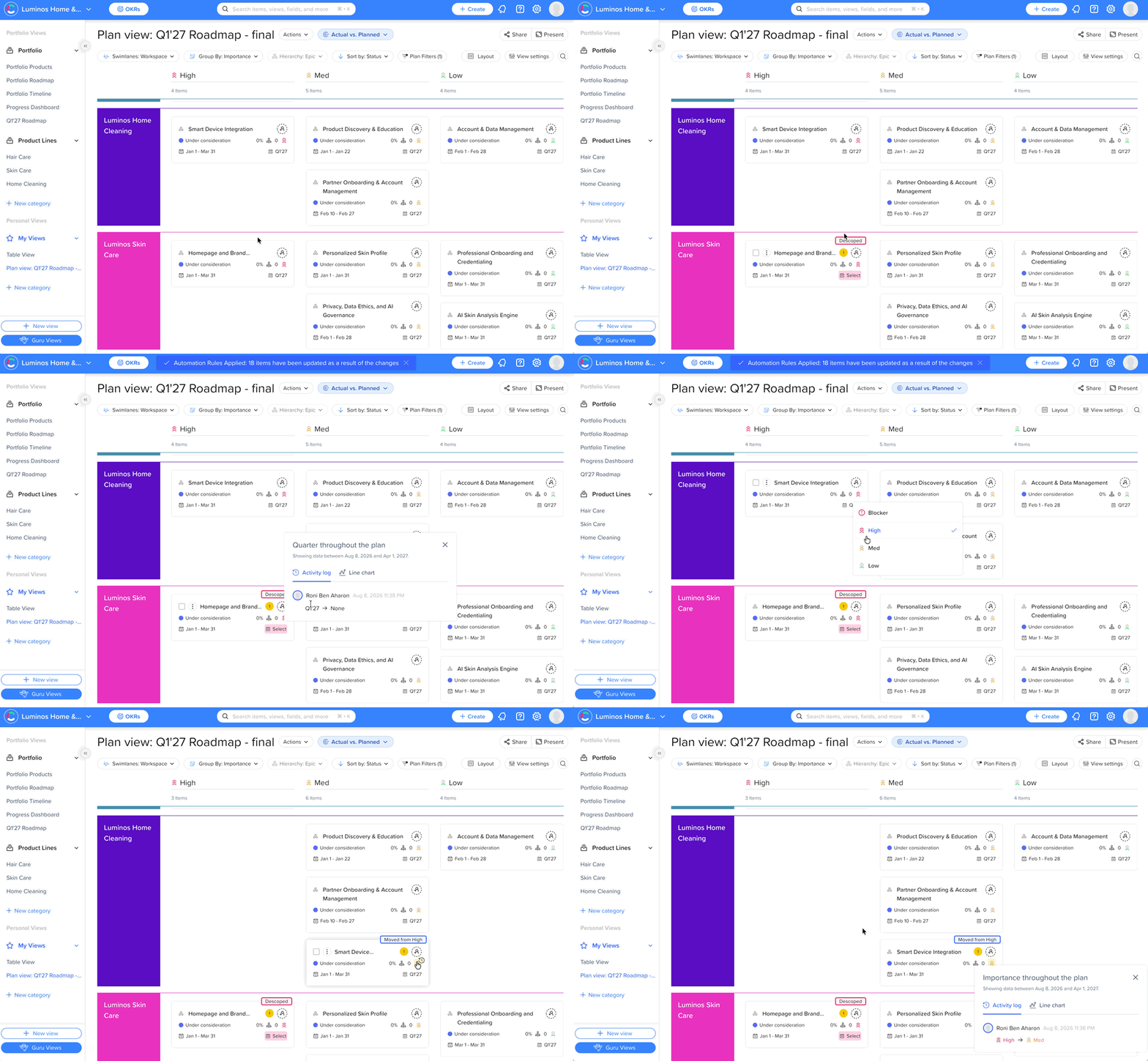
Once the plan is agreed, Craft.io’s Actual vs. Planned view preserves that original plan as a baseline. As priorities shift, leaders can see what remained in the plan, what was added, and what was removed – making changes visible instead of allowing the plan to quietly drift.
It’s a really powerful way of showing inside Craft what we said we were going to do - and, over the course of the PI increment, how we’re really doing and what has changed.
Patrick Howard, Vice President of Product Management at Payroc
Craft.io’s Actual vs. Planned view shows what Payroc originally planned – and what changed over the course of the PI:
When & How?
Connecting Roadmaps and Delivery
Once plans were in place, Payroc’s next challenge was communicating when work was expected – and maintaining visibility as delivery progressed.
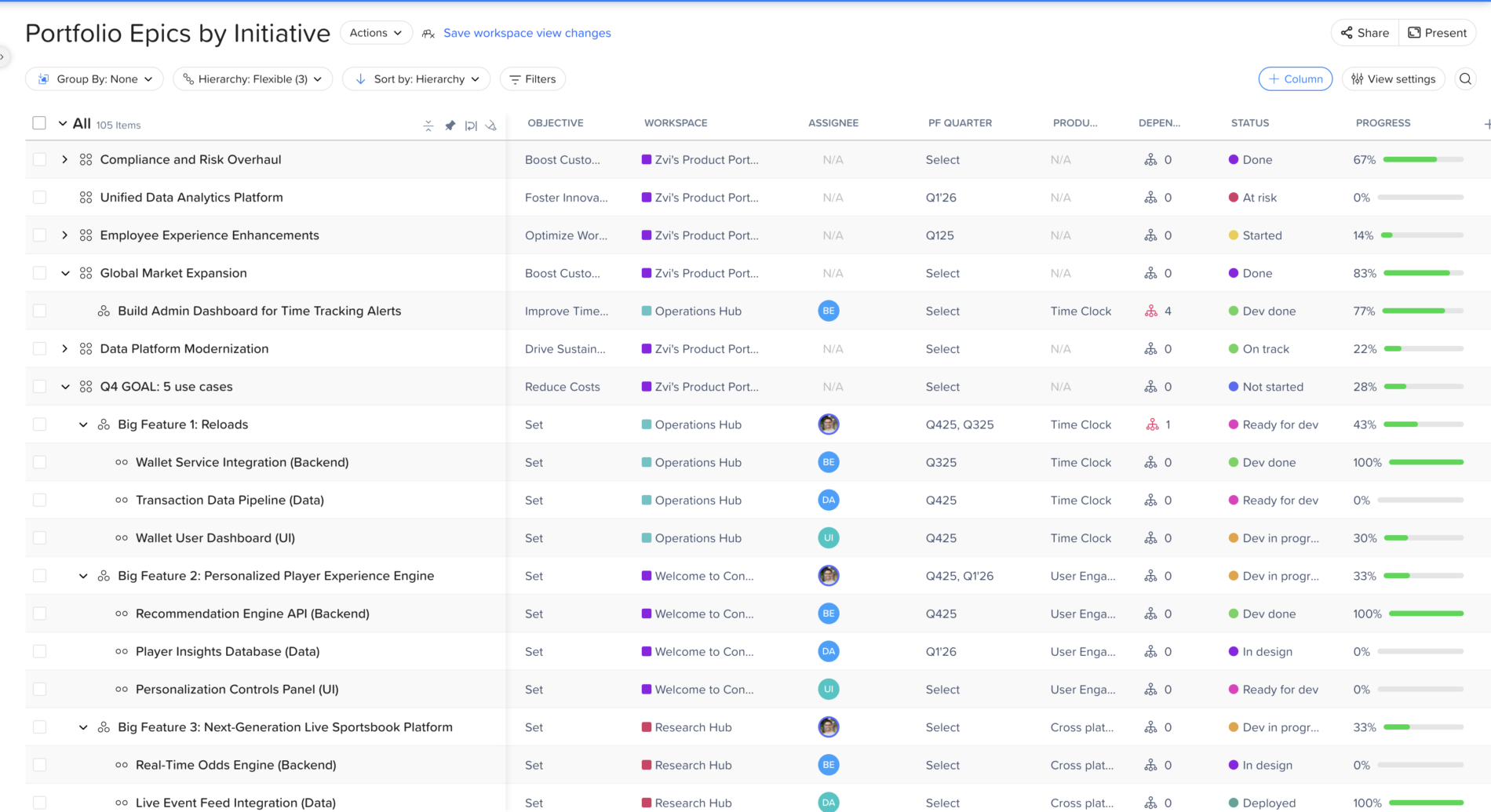
Craft.io’s portfolio roadmaps bring plans from across product areas into shared views organized by strategic initiative, product pillar, and timeframe. Payroc can distinguish between work underway now, planned next, and not yet scheduled, while tailoring the level of detail for teams, stakeholders, and executives.
We are shifting from more of a technology-led roadmap to one driven by product strategy and customer needs.
Casey Conley, Chief Product Officer at Payroc
Craft.io’s two-way Jira integration connects roadmaps to execution. Engineering works in Jira, while Product and leadership track delivery progress in Craft.io alongside the strategy and planned work behind it.
Payroc’s portfolio roadmaps connect delivery expectations to strategic initiatives and product pillars:
The Outcome
From Team-Level Work to Board-Level Visibility
With shared product data connecting intake through delivery, Casey Conley, Chief Product Officer at Payroc, now uses Craft.io for executive standups, executive reporting, and board reporting.
Instead of gathering updates from individual leaders and manually assembling them, he can see what teams are working on, how plans connect to strategy, and where priorities have changed.
The same product data can be shaped into the executive and portfolio views leadership needs.
Craft provides the data behind all of my executive reporting, executive standups, and board reports. I don’t have to call any of my direct reports - we can get on a call and see exactly what’s happening across the product organization.
Casey Conley, Chief Product Officer at Payroc