How to Prioritize Feature Requests from Customers: A Guide for Product Teams
Why Feature Request Prioritization Breaks Down
Every product team feels it eventually. The backlog grows. Sales forwards another customer email. An executive champions a feature because one big account asked for it. And suddenly, the roadmap is being driven by whoever spoke loudest or most recently rather than by what will actually move the product forward.
Managing feature requests without a structured process means your team spends time building things that feel urgent but aren’t strategic. A single enterprise customer’s request gets fast-tracked while ten smaller customers asking for the same thing go unheard. The result is a roadmap that pleases no one and a backlog that keeps growing.
A structured approach to feature prioritization fixes this. It replaces gut feel and internal politics with a repeatable process your whole team can defend, including the Head of Product or VP who has to sign off on quarterly plans.
Start With a Single Place to Collect Requests
Before you can prioritize anything, you need to capture everything in one place. Feature requests come in through support tickets, sales calls, NPS surveys, user interviews, and direct messages. When those channels are disconnected, requests get lost, duplicated, or forgotten.
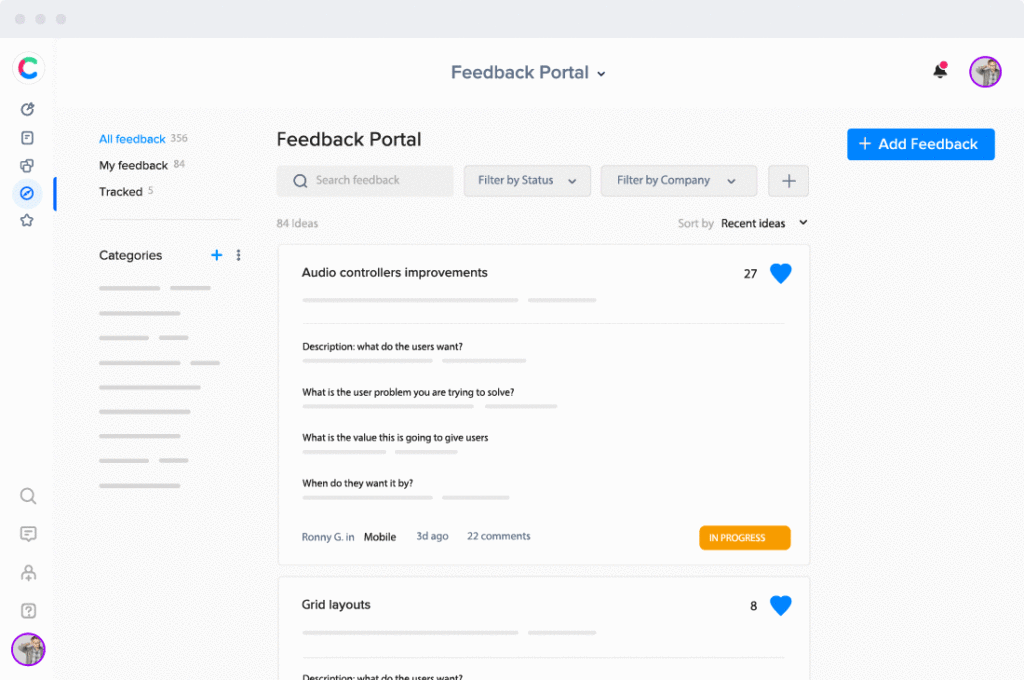
Product feedback management software solves this by centralizing all incoming requests so nothing falls through the cracks. craft.io includes a dedicated Feedback module that pulls customer input into a shared workspace, where product managers can tag, cluster, and link feedback directly to items in the backlog. That connection matters because it lets you trace a roadmap decision back to the customers who asked for it.
Once requests are centralized, you can start to see patterns. Ten customers asking for the same integration tells a different story than one customer asking for a custom workflow that only their team uses.
Scoring Requests So the Data Drives the Decision
Centralized feedback is only useful if you have a way to rank it. Weighted scoring is one of the most practical methods for product teams because it forces you to define what matters before you evaluate any individual request.
A weighted scoring model assigns criteria such as customer impact, strategic fit, revenue potential, and implementation effort to each request, with weights reflecting your current priorities. A feature that scores well on customer impact but poorly on strategic fit gets a different result than one that aligns tightly with your OKRs but affects only a small segment of users.
craft.io’s prioritization tools let teams build these scoring models directly inside the platform, so the criteria and weights are visible to everyone. You’re not recalculating a spreadsheet every time a new request comes in. The scores update as you work, and you can filter and sort the backlog by score to surface what actually belongs at the top.
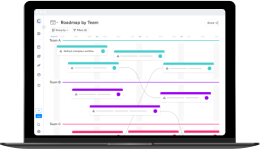
For teams that want to go further, craft.io connects feedback scores to roadmap views, so stakeholders can see not just what’s planned but why it ranked above everything else. That visibility makes it much easier to push back on a last-minute request with data rather than opinion.
Prioritization Methods Worth Knowing
Weighted scoring isn’t the only approach. Different teams use different frameworks depending on their stage, their customers, and how their product is structured. A few that come up often in practice:
- RICE scoring: Reach, Impact, Confidence, and Effort. Useful when you want a single numeric score that accounts for how certain you are about the impact estimate.
- Value vs. effort: A simple two-axis grid that separates quick wins from long projects. Good for early-stage teams or when you need a fast triage.
- Jobs-to-be-done grouping: Cluster requests by the underlying job the customer is trying to accomplish, not the specific feature they described. Often reveals that ten different requests are really one problem.
The method matters less than the consistency. Teams that switch frameworks every quarter rarely build the institutional knowledge needed to get faster and more accurate over time. Pick a model, document your criteria, and apply it the same way across every review cycle.
craft.io’s guide to feature prioritization frameworks covers several of these in more depth if you want to compare them before committing.
From Prioritized Backlog to Roadmap Decision
Prioritization doesn’t end when you score the backlog. The harder question is how a ranked list of feature requests connects to an actual roadmap decision that your engineering team can work from and your leadership team can review.
craft.io is built to close that gap. The platform links feedback and prioritization directly to roadmap views, and it connects to delivery tools like Jira so the work product managers plan is the same work developers execute. You’re not maintaining two systems or copying items between tools.
For Heads of Product and CPOs reviewing the roadmap, that traceability is the business case. A feature on the roadmap backed by documented customer demand, a clear score, and a visible connection to company OKRs is a much easier conversation than one that landed there because someone in a meeting was persuasive.
If your team is still managing this process in spreadsheets or across disconnected tools, the craft.io Feedback module and prioritization tools are worth a look. You can also explore how managing customer feedback fits into a broader product management process.