Jira Product Discovery alternatives: what to look for when you outgrow it

When a Jira roadmap stops being enough
Many product teams start with Jira Product Discovery because their engineers already work in Jira. The pull is obvious: ideas, delivery and backlog sit close together. The trouble tends to start later, when a Head of Product or VP Product is asked to answer questions that cut across several teams. Which initiatives support which company objectives? What are customers actually asking for? How does one team’s plan affect another’s?
This guide is for product teams already on Jira who are comparing a Jira roadmap tool against a dedicated product management platform. It lists the questions worth asking before you switch, and what to check so you do not lose work in the move.
Signs you are outgrowing a Jira-first setup
Switching tools is a real cost, so it should be driven by a specific gap, not a general feeling. These are the gaps that usually matter to a product leader signing off on a purchase:
- You need to see several products or teams on one roadmap, not one board per team.
- Leadership wants roadmap items tied to company objectives, and you are maintaining that link by hand in slides or spreadsheets.
- Customer feedback and feature requests arrive by email, chat and sales calls, and nobody has one place to review them.
- Prioritization happens in meetings and is not recorded against a method the team agreed on.
- You cannot easily compare what was planned with what shipped.
If none of these apply, staying put may be the right call. If two or three do, it is worth a structured comparison.
Questions to ask before you switch
Put these to every vendor on your shortlist, including Craft.io, and ask to see the answer in the product, not on a slide.
- Does it connect to Jira without double entry? Craft.io lists integrations as part of the platform, so check exactly which fields sync and in which direction before you commit.
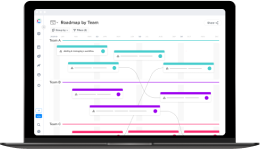
- Can it show a portfolio view across teams? Look for roadmap and portfolio views that your CPO can read without a walkthrough.
- Can roadmap items be linked to OKRs? Craft.io describes linking OKRs to initiatives, epics and features, and building OKR-based roadmaps and dashboards. Ask any vendor to demonstrate that link end to end.
- Where does customer feedback go? Craft.io describes inviting people to give feedback on your product, or syncing existing data, so you can see what users need. Ask how feedback is tied to the features it influenced.
- How is prioritization handled? Craft.io describes built-in prioritization best practices. Ask whether the scoring method is visible to stakeholders afterwards.
- Who will own it? Decide whether product ops or the product team will administer the tool, since that changes how much setup you can absorb.
What carries over and what you should plan for
Before you move, list what your team keeps in Jira today: epics, ideas, statuses, linked issues, and any roadmap views leadership relies on. Your engineers will probably keep working in Jira for delivery, so the practical goal is for product planning to live in one place and for that work to stay connected to the delivery tickets.
Run a small pilot before a full cutover. Pick one product team, move its roadmap and feedback, and check three things after a few weeks: do engineers still see what they need in Jira, can leadership read the roadmap without help, and has the time spent on status reporting gone down? Confirm migration details and any import options with the vendor directly, because those depend on your setup.
Where to look next
For a direct feature-by-feature look, read the existing Craft.io versus Jira Product Discovery comparison. To judge fit for your own team, see how the Craft.io roadmap connects strategy to features, check OKR software for product management, and review feedback management. If you manage several products, the product portfolio management page covers that use case, and pricing shows how Craft.io is priced.
When you are ready to test it against your own roadmap, you can try Craft.io for free or book a demo.
Jira Product Discovery alternatives: common questions
Do I have to stop using Jira if I switch roadmap tools?
No. Many teams keep Jira for delivery and move product planning elsewhere. Check how the new tool integrates with Jira so work stays connected and nobody enters the same information twice.
What should a Jira roadmap tool alternative cover?
Look at portfolio views across teams, links from roadmap items to OKRs, a single place for customer feedback, and a recorded prioritization method. Ask each vendor to show these in the product.
How can I link roadmap items to company objectives?
Craft.io describes linking OKRs to initiatives, epics and features, and building OKR-based roadmaps and dashboards. Ask to see this demonstrated with your own objectives before you decide.
How do I collect customer feedback in one place?
Craft.io describes inviting people to give feedback on your product or syncing existing data to see what users need. Ask how each request ties back to the features it influenced.
What is the safest way to test a switch?
Pilot with one product team first. Move its roadmap and feedback, then check whether engineers still see what they need in Jira and whether leadership can read the roadmap without help.
Who is the guide for?
Product teams already using Jira who want portfolio views, OKR links and feedback handling together, and the Head of Product or product ops lead who approves the purchase.