Use Case vs. User Story: Why You’d Better Know the Difference

Confusing a use case vs. user story is a common mistake that can derail a product roadmap. While the names sound alike, the similarities end there. To build successful products, you need to know exactly when to utilize use cases vs. user stories. This guide breaks down the definitions, differences, and how to articulate both effectively.
Business Use Case vs. User Story Examples
Bottom line upfront: Use cases and user stories work together to outline both the strategic reasoning for a piece of functionality and the tactical details of how a customer will use that functionality to complete a desired task. The use case sets the strategy, and the user stories create the blueprints for executing on that strategy.
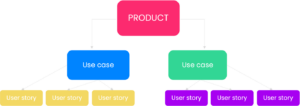
A Fintech Scenario: From Strategy to Tactics.
Here is what that looks like in practice. Let’s say you are the Product Manager for a fintech startup. Your flagship product is an app that helps individuals and small businesses track all their monthly expenses (credit cards, debit cards, checking accounts, etc.) in one place.
After brainstorming with your team, validating the concept with people representing your ideal buyer, researching competitors — and completing all of the other key product planning steps — you identify a few high-value strategic uses for your proposed product. You then translate these into your initial business use cases.

The Strategic Use Cases:
- Individuals and households will use our app to learn how and where they’re spending.
- Individuals and households will use our app to develop a budget.
- Small businesses will use our app to track and easily identify expenses and tax deductions.
As you can see, these use cases are concise, high-level descriptions of how your customer will use and benefit from your product. They are not detailed explanations of the product’s features or layout. And as the Product Manager, you will be responsible for crafting these strategic use cases.
You’ll then hand them off to another member of your team — a Product Owner if you have one, or perhaps someone on your development team — to translate these high-level plans into tactical instructions that your Developers can execute. Here’s what those might look like.

The Tactical User Stories:
Now that we have established the strategy, we need to translate those goals into execution. This is where the user story vs use case difference becomes most apparent.
Here are three use case vs user story examples based on the fintech scenario above:
-
Spending Insights
-
Use Case: Individuals and households will use the app to understand how and where they are spending their money.
-
User Story: As a financially responsible person, I want the app to automatically assign categories to each type of spending (such as food, fuel, entertainment, etc.) so that I can easily see how much I spend on each expense category.
-
-
Budget Adherence
-
Use Case: Individuals and households will use the app to create and manage a budget.
-
User Story: As a financially responsible person, I want to set maximum monthly amounts for each spending category and receive alerts when I am close to reaching those limits so that I can keep my spending within my budget.
-
-
Tax Preparation
-
Use Case: Small businesses will use the app to track expenses and identify tax deductions.
-
User Story: As a small business owner, I want the app to automatically categorize each type of business expense so that I can easily calculate potential tax deductions and make tax preparation faster and simpler.
-
As you can also see, your user stories should always map directly to a specific use case. In the next section, we’ll discuss why this is so important, and how failing to do so can lead to problems with your product.
A Hack for Writing Great User Stories
Before we jump into the technical definitions of user story vs use case, we want to point out one strategy for making the documentation process easier.
Regardless of which format you choose, make sure you’re using a product management platform that centralizes your inputs. Craft.io allows you to integrate your user personas and feedback directly into your workflow. This ensures that whether you are writing a broad user story or a specific business use case, you have the full context right in front of you. With that in mind, Try craft.io for free.

Best Practices for Writing Use Cases and User Stories
1. Always start with use cases.
Because the use case sets the strategic stage for a piece of functionality and captures the “why” describing how it will benefit your customer, you’ll always want to craft these before your team writes the product’s tactical user stories.
2. Always map user stories to specific use cases.
This best practice is a corollary to the one above. Start with writing your high-level use cases and then limit your team’s user stories to those that directly support a use case. If you write user stories first, or write stories that you can’t map to any use case, you have no strategic justification for asking your development team to write the code for those stories.
3. Write them succinctly and using plain language.
One of the virtues of use cases and user stories is that if you craft them properly, all of your stakeholders can easily understand them. That’s why successful product teams use the format that we introduced above to write their stories. That simple construction — As a [persona], I want to [action] so that I can [desired result] — forces the team to think clearly through its proposed functionality and the reasoning behind it, and makes it easy for Developers to understand what the team is looking for.
Bonus Tip: Prioritize Only a Few Use Cases at a Time
When craft.io interviewed product professionals around the world for our 2023 State of Product Management Report, we found that one of the biggest challenges facing Product Managers is prioritization.
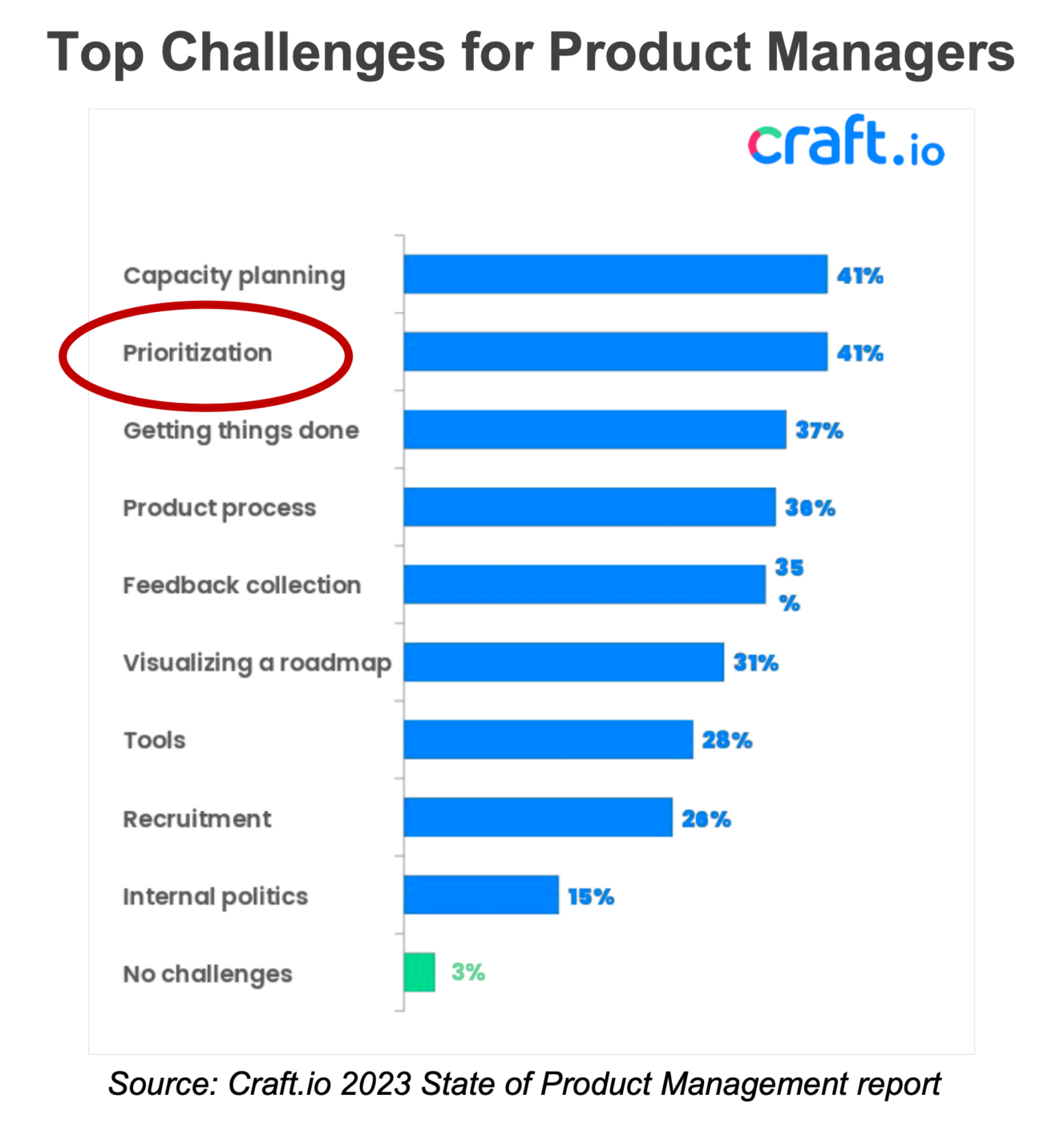
This makes sense. As a Product Manager, you will often come across more great ideas than your team can execute. In fact, our report found that capacity planning is the top challenge for PMs today.
This is why one of the secrets to a successful product strategy is knowing how to prioritize use cases vs. user stories and focusing on only a few high-value plans at a time.
Let’s return to our fintech startup example.
In that hypothetical, your product team’s initial research led you to prioritize just a few finance-tracking capabilities at first. But let’s say your research revealed that some customers would also like it if your app helped them monitor their investments.
Your cross-functional team could easily become overwhelmed trying to satisfy these requests at the same time as well. You might need to build partnerships with the major investment brokerages to integrate into their apps and websites, for example, and your Developers will need to write plenty of additional code for an investment section of your app.
However, if you analyze your business use case, you might find that investment monitoring is merely a “nice-to-have” compared to the core expense tracking.
By strictly defining your use cases first, you are in a better position to devote your resources to building an outstanding app focused on the core features your users actually need.
This is why writing use cases (and then translating them into user stories) is the best way to go from concept to market release. It forces your team to focus only on the most strategically advantageous functionality and prioritize your product’s functionality more effectively.
Bonus Tip #2: Centralize Your Product Content

Finally, a great way to ensure you have the proper context for writing successful use cases and user stories is to centralize all of the product content you’ll need to inform what you write. That includes your backlog, stakeholder feedback, product roadmap, user personas, product strategy, prioritization exercises, and capacity planning.
If you can review and analyze all of this key content in one place — like the end-to-end product platform from craft.io — you and your team will be in a better position to write use cases (and later, user stories) and build great products with confidence.

Try craft.io for free

FAQ
What is the main use case vs user story difference?
The core use case vs user story difference is strategy vs. tactics: use cases define the strategic “why” (goals), while user stories detail the tactical “how” (execution).
Can you provide specific use case vs user story examples?
Yes. In a fintech app scenario, one of the use case vs user story examples would be:
- Use Case: Individuals will use the app to develop a budget.
- User Story: “As a financially responsible person, I want to set maximum dollar amounts for food spending so that I can keep my spending below my monthly budget.”
Can a use case have multiple user stories?
Yes, a single use case can often be broken down into multiple user stories. Use cases typically include a main scenario, alternative scenarios, and exception scenarios. Each of these flows can be represented as separate user stories, especially when you want to deliver them incrementally in agile sprints.
Can I manage both use cases and user stories in Craft.io?
Absolutely. Craft.io enables you to create, organize, and connect both use cases and user stories, ensuring complete traceability from high-level goals to detailed implementation steps.