craft.io vs Jira Product Discovery: What Product Managers Need to Know
Two tools, one Jira integration — but very different jobs
If your team already runs on Jira, Jira Product Discovery probably looks like an obvious next step. It lives inside the Atlassian ecosystem, surfaces ideas from your engineers and stakeholders, and links those ideas directly to Jira issues. For teams that want lightweight idea capture without leaving Atlassian, it does that job reasonably well.
The question worth asking before you commit is: how much of product management are you actually trying to support? Idea capture is one slice. Strategy, prioritization, roadmapping, specs, feedback management, capacity planning, OKRs, and portfolio visibility are the rest. If you need the full picture, a tool built around idea triage inside a delivery tracker will start to feel narrow.
craft.io is a dedicated product management platform. It also integrates with Jira – so your engineers keep working exactly as they do today – but it is built from the ground up to support the entire product lifecycle, not just the upstream handoff to development.
Where it falls short for product management
Jira Product Discovery is built around a single workflow: collect ideas, rank them, push them to Jira. That works at a certain scale and maturity level. It starts to show limits when your product team needs to do more than that.
Roadmapping in Jira Product Discovery is basic. You can create a roadmap view, but it is tied tightly to Jira issues rather than being a strategic communication tool you can share with executives or customers. Product teams that need multiple roadmap views for different audiences – one for engineering, one for leadership, one for customers – will find themselves working around the tool rather than with it.
Portfolio management is absent. If you manage more than one product, or if your Head of Product needs a roll-up view across teams and products, Jira Product Discovery does not support that. Neither does it provide the kind of capacity planning that tells you whether your team can actually deliver what the roadmap promises.
Specs and feature definition live elsewhere. Jira Product Discovery does not have a structured way to write and share product specs. Teams end up splitting context across Confluence, Google Docs, and Jira tickets – which creates the kind of fragmentation that slows delivery and loses decisions.
Feedback management is limited. There is no structured pipeline for capturing, tagging, and analyzing customer feedback at the volume that a growing product team handles. Connecting customer evidence to prioritization decisions requires manual effort.
What craft.io covers across the full lifecycle
craft.io is built to handle the parts of product management that sit outside Jira’s scope. The platform covers strategy, OKRs, feedback management, backlog and prioritization, feature definition, roadmapping, capacity planning, portfolio management, and reporting – in one place, with a two-way Jira integration that keeps engineers working in Jira Software without disruption.
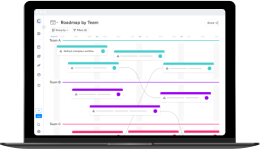
Roadmaps in craft.io are designed to communicate strategy, not just reflect Jira ticket status. You can build multiple roadmap views for different audiences and share them without giving stakeholders access to your backlog.
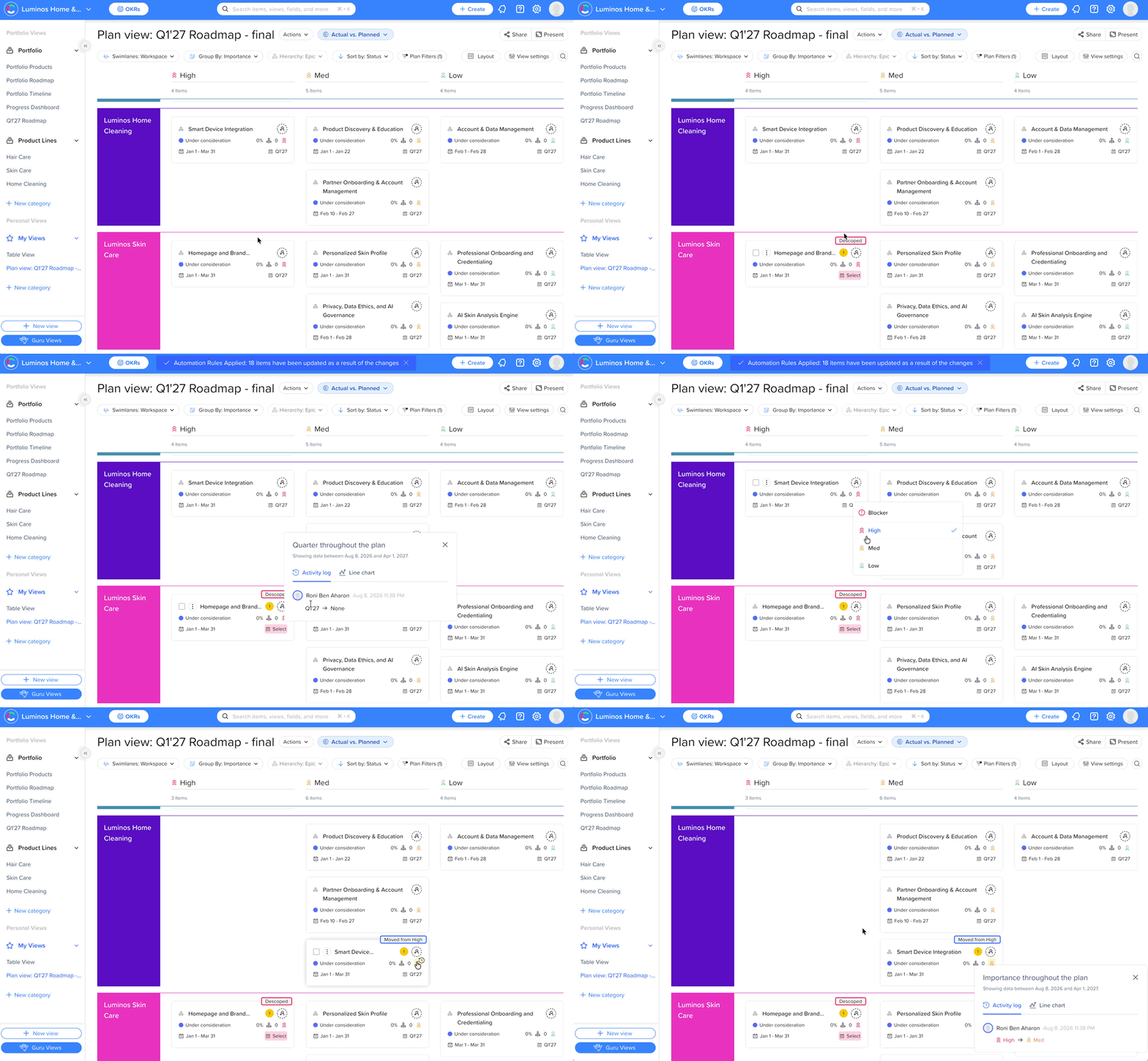
The prioritization tools give you structured frameworks to score and rank features against each other, so the backlog reflects deliberate decisions rather than whoever lobbied hardest. That scoring connects directly to the feedback management layer, where customer requests and usage signals feed into prioritization rather than living in a separate spreadsheet.
For Heads of Product and CPOs, portfolio-level visibility shows what multiple teams are building, where resources are committed, and how roadmaps align to company strategy. That is the kind of view that makes a business case in a leadership review – and it is not something Jira Product Discovery provides.
craft.io also connects OKRs to roadmap items, so product teams can show how individual features tie back to company objectives. That thread from strategy to delivery is something most teams try to create manually with slides and spreadsheets. Having it in the platform removes a significant coordination overhead.
How to think about the decision
Jira Product Discovery makes sense if your workflow starts and ends at the Jira boundary – you need idea collection and basic ranking, and your product process is not yet complex enough to need more.
craft.io makes sense when the product team is the connective tissue between customer feedback, company strategy, and engineering delivery. That usually means you need roadmaps that leadership can read, prioritization that you can defend, specs that stay attached to the right backlog items, and portfolio visibility that answers the question: are we building the right things?
Because craft.io integrates with Jira, switching does not mean disrupting your engineering team. Jira stays the delivery system. craft.io becomes the product layer that sits in front of it.
If you want to see how it fits your team’s specific setup, book a demo or start a free trial at craft.io.