Productboard vs. craft.io: Which Product Management Platform Is Right for Your Team?
Two Strong Tools, One Difficult Choice
If you are evaluating product management platforms, Productboard and craft.io will almost certainly land on the same shortlist. Both handle roadmapping, feedback, and feature prioritization. Both connect to Jira. And both are aimed squarely at product teams that have outgrown spreadsheets.
The difference shows up when you dig into how each tool structures your work, and who it is actually built for. This page breaks down the key areas where Productboard and craft.io diverge, so you can make the call with confidence rather than guessing from a feature matrix.
Roadmapping: Flexibility vs. Structure
Productboard centers its roadmap experience around a portal-first model. You collect inputs, score them, and surface priorities to stakeholders through a shared view. The roadmap itself is largely a communication layer on top of that prioritization work.
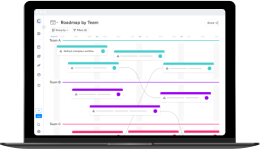
craft.io approaches roadmapping as an active planning surface that connects directly to your product strategy, OKRs, and delivery work. You can build roadmaps at the feature level, the portfolio level, or anywhere in between. The platform includes a dedicated portfolio roadmap view, which matters for teams managing multiple product lines. There is also an Actual vs. Planned view that lets you track how delivered work compares to what was originally committed, a capability that is genuinely useful when you are reporting to a VP Product or CPO who wants to understand delivery confidence over time.
If your roadmap is mostly a stakeholder communication tool, both platforms cover the basics. If you need it to do more – connect to OKRs, track delivery fidelity, or span a portfolio – craft.io gives you more to work with.
Feedback and Feature Prioritization
Productboard built its reputation on feedback management. Its customer insights inbox and feature scoring engine are mature and widely used. Teams that receive high volumes of user feedback will find it handles the collection and tagging workflow well.
craft.io includes feedback management as part of a broader platform rather than treating it as the centerpiece. You can collect and prioritize feature requests and ideas, connect them to features, and move them through a structured prioritization process. The prioritization tooling supports multiple scoring frameworks, and the output feeds directly into the roadmap without requiring you to jump between modules.
For a Head of Product who needs to show stakeholders a clear line from customer input to roadmap commitment, craft.io keeps that chain visible in one place. The feedback does not sit in a separate portal; it is woven into the same workspace where planning decisions get made. You can read more about how product teams approach this in the guide on product feedback management.
If your primary workflow is processing large volumes of customer feedback and you already have roadmapping covered elsewhere, Productboard may fit. If you want feedback, prioritization, and planning in a single connected environment, craft.io is the stronger option.
Jira Integration: Closing the Gap Between Planning and Delivery
Both platforms integrate with Jira, but the depth matters. Productboard sends items to Jira and pulls back status updates, which covers the basic handoff from planning to engineering.
craft.io is built on the assumption that the planning layer and the delivery layer need to stay genuinely synchronized, not just linked. The Jira integration maps features and specs to Jira issues, pulls back progress data, and surfaces that information inside your roadmap so you can see planned work against what is actually moving. The Actual vs. Planned module sits on top of this, giving product leads a view into whether the roadmap is tracking as expected or drifting.
For a VP Product making the case internally for a new tool, this matters. The question is not just whether the platform handles planning well, it is whether it reduces the back-and-forth between product and engineering and gives leadership a reliable picture of delivery. craft.io is designed to answer that question. The guide on connecting product roadmaps to Jira covers the practical mechanics in more detail.
Which Platform Fits Your Team?
Productboard is a capable tool with a strong feedback-first design philosophy. It works well for teams that want a structured way to collect customer insights and communicate priorities to stakeholders.
craft.io is built for teams that need more than that. If you are running a product organization where roadmapping, OKR alignment, prioritization, feedback, specs, and Jira integration all need to live together coherently, craft.io is designed around that whole workflow rather than one part of it. It also includes portfolio management for teams running multiple products, and an enterprise-grade security and permissions model for organizations that need it.
The right way to evaluate either platform is to run it against your actual workflow. craft.io offers a free trial and a demo option, so you can see how it handles your specific planning process before making a decision. Visit the pricing page for plan details, or get in touch if you want to talk through the business case with the team.