Aha! vs. craft.io: Which Product Management Platform Wins for Roadmapping and Prioritization?
Why Product Managers Are Looking at Both
If you’re evaluating Aha! and wondering whether craft.io fits your team better, you’re in the right place. Both are paid product management platforms, but they solve the roadmapping and prioritization problem differently. This page walks through where each tool is strong, where it falls short, and what the business case looks like when you’re ready to take a recommendation to a VP Product or CPO.
Aha! has been around long enough to accumulate a wide feature set. craft.io was built specifically around the product manager’s workflow: strategy, roadmaps, prioritization, feedback, and specs, all connected to delivery through integrations with tools like Jira. The question isn’t which one has more features. It’s which one maps to how your team actually works.
Roadmap Software: How the Two Approaches Differ
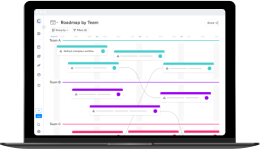
craft.io connects product strategy directly to roadmap items. You can build roadmaps that reflect your OKRs, link features back to strategic objectives, and keep stakeholders looking at the same live view rather than a slide deck that went stale the moment you exported it. The platform includes an Actual vs. Planned view, which lets you track how your roadmap is holding up against what actually shipped. That’s a practical feature Heads of Product often ask about when they’re tired of explaining slippage in retrospect.
Roadmap views in craft.io are designed to serve different audiences without requiring you to maintain separate decks. The same underlying data can be presented to engineers, executives, or customers with the level of detail each group needs. If your current process involves rebuilding the same roadmap in PowerPoint every quarter, that alone is worth evaluating.
For teams that need to manage multiple products at once, craft.io also offers portfolio-level roadmapping, which rolls individual product roadmaps into a single view for leadership. That’s a capability that typically requires a step up in Aha!’s pricing or configuration.
Feature Prioritization: Structured Frameworks vs. Flexible Scoring
Prioritization is where product teams lose the most time. craft.io includes a dedicated prioritization tool that lets you score features against custom criteria, weight those criteria by what matters to your business, and surface the items that rise to the top objectively. You can build scoring models that reflect your strategy rather than forcing your strategy into a fixed framework.
This matters in practice because the conversation with a CPO changes when you can show that a feature ranked first on a model that weighted customer revenue impact, strategic fit, and implementation cost, rather than just saying it felt like the right call. Structured prioritization creates a paper trail that supports faster sign-off at the leadership level.
craft.io also captures feature requests and feedback directly in the platform through its feedback management module, so prioritization decisions can reference actual customer input rather than internal assumptions. If you’re comparing against Aha!’s ideas portal, it’s worth checking whether your team needs feedback collection and prioritization in the same tool or whether you’re comfortable stitching them together separately.
Jira Integration and Team Fit
One of the clearest practical differences is how each platform handles the handoff to engineering. craft.io integrates directly with Jira, which means product decisions made in craft.io can flow into Jira without a manual sync step. Features, specs, and priorities stay connected to the work engineering actually tracks. For teams where the PM and engineering relationship gets strained by tool friction, this is a meaningful reduction in overhead.
craft.io also connects with design tools including Figma, Miro, Lucidchart, InVision, and Adobe XD, so product specs can reference the actual designs rather than descriptions of them. That matters during review cycles and when onboarding new team members who need context fast.
In terms of team size, craft.io works for growth-stage teams that need structure without overhead, and for enterprise teams that need portfolio visibility and governance. The enterprise portfolio layer handles multi-product organizations where a single roadmap view doesn’t cut it for the leadership audience.
Which One Is Right for Your Team
If your team is evaluating Aha! alternatives and the main pain points are roadmap clarity, prioritization discipline, and a cleaner connection to Jira delivery, craft.io is worth a direct look. The platform is built around the product manager’s day-to-day, not around project tracking that product managers have been asked to use.
The business case for a Head of Product or CPO usually comes down to three things: does the tool reduce the time product managers spend on process overhead, does it make strategic alignment visible across the organization, and does it connect product work to what engineering is actually building. craft.io addresses all three in a single platform.
You can explore pricing at craft.io/pricing or book a demo to see how it maps to your team’s specific workflow. If you want to dig deeper into how the roadmap tool works before that conversation, the roadmap platform page and the roadmap tool buyer’s guide are good places to start.