Product roadmap examples for SaaS teams, by audience
One roadmap, four audiences
Most product teams do not have a roadmap problem. They have a presentation problem. The plan is fine, but the same view gets sent to the CEO, the engineering lead, the sales team and a customer, and it fits none of them well.
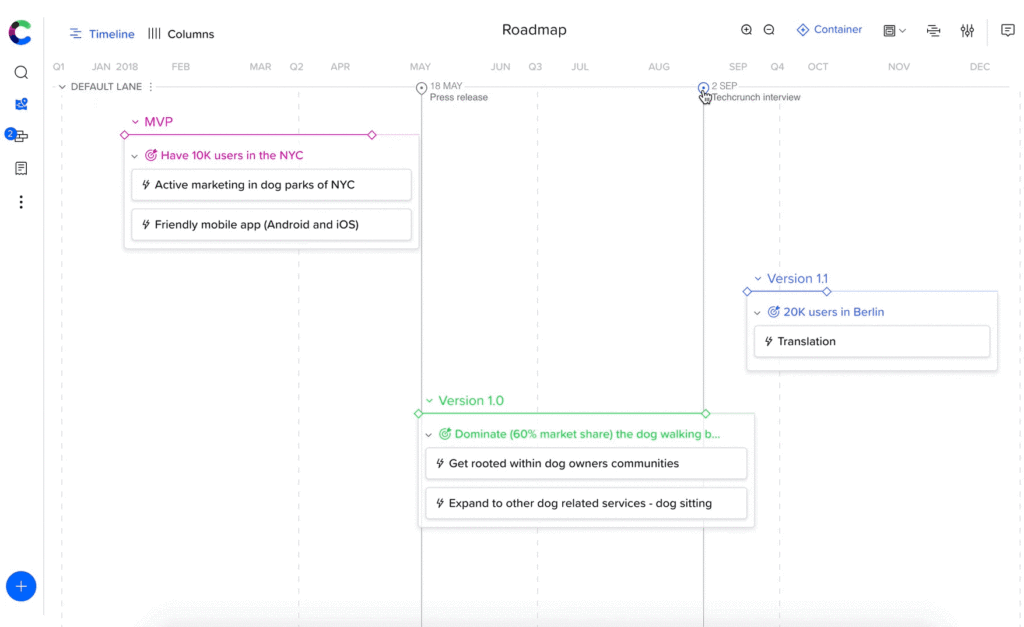
A roadmap tool earns its place when it lets you keep one plan and show it differently to each audience. In craft.io, goals link to initiatives and initiatives link to features in the backlog, so every view comes from the same source. Below are four examples of what to include and what to leave out for each audience. For templates you can copy, see our product roadmap templates post.
Example 1: the executive roadmap
Executives want to know whether the product is moving toward company goals and where the money and headcount are going.
- Include: company objectives and OKRs, the strategic initiatives tied to them, a timeline of six months to a year, and a clear status on each initiative.
- Leave out: individual features, ticket numbers, sprint detail and anything that reads like a task list.
The test is whether a VP can read it in a minute and say what the product team is betting on this year. Linking initiatives to objectives is what makes that possible. The OKR software guide covers how objectives connect to features and roadmaps.
Example 2: the engineering roadmap
Engineers need to know what is coming, how big it is and whether it fits the capacity of their team.
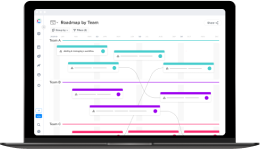
- Include: features and epics linked to each initiative, team lanes showing who owns what, dependencies between items, and the delivery tool the work lives in, such as Jira.
- Leave out: revenue projections, long-range market bets and anything still at the idea stage.
Capacity is the key difference here. An engineering view that ignores what each team can actually take on will be ignored in return. See 7 essentials to simplify capacity planning for how to build that in.
Example 3: the sales and customer success roadmap
Sales and customer success teams get asked the same question on every call: is feature X coming, and when?
- Include: themes and problems being solved, a rough timeframe such as now, next and later, and the customer feedback that shaped each theme.
- Leave out: exact dates, internal estimates and items that are still being explored.
Exact dates are the main thing to hold back. A date that slips becomes a broken promise to a prospect. Time horizons give the field team something honest to say. Pairing the roadmap with a feedback process helps too, and tips for managing customer feedback is a good place to start.
Example 4: the customer-facing roadmap
A customer-facing roadmap is the shortest of the four. Its job is to show customers you are listening and heading somewhere they care about.
- Include: a handful of themes written in customer language, recently shipped items, and what is planned next.
- Leave out: commitments with dates, internal project names, competitive plans and anything legal or security has not cleared.
Write each item as a benefit, not a feature name. Customers do not care about the name of your internal epic. They care that reporting will get faster or that an integration they asked for is on the way.
Keeping all four views in sync
The risk with audience-specific roadmaps is drift. If you maintain four separate documents, they stop matching within a month. The fix is a single plan with filtered views, so a change to an initiative shows up everywhere it appears.
That is how a dedicated product roadmap tool works: goals, initiatives and features live in one place, and each audience sees the slice that matters to them. Read how a product roadmap tool works for the mechanics, or see the craft.io roadmap platform page to see how strategy connects to features. If you are comparing options, our guide to the best product roadmap software covers what to look for.
Product roadmap examples: common questions
Do I need a separate roadmap for each audience?
You need a separate view, not a separate plan. Keeping one source of goals, initiatives and features and filtering it for each audience avoids the drift that happens when four documents are edited by hand.
What should an executive roadmap include?
Company objectives, the strategic initiatives tied to them, a timeline of six months to a year, and a clear status on each initiative. Leave out individual features and sprint detail.
Should a sales roadmap show exact release dates?
It is safer to use time horizons such as now, next and later. A date that slips becomes a broken promise to a prospect, so keep exact dates for internal views.
What belongs on a customer-facing roadmap?
A handful of themes written in customer language, recently shipped items and what is planned next. Leave out dated commitments, internal project names and competitive plans.
How does a product roadmap tool help with audience-specific views?
A roadmap tool links goals to initiatives and initiatives to backlog features, so each audience can see the slice that matters to them while all views come from the same plan.