Best product roadmap software for product teams: how to choose
A roadmap tool earns its place when three groups can use the same plan: the product team that builds it, the stakeholders who read it, and the engineers who deliver against it. Many teams start with slides and spreadsheets, then find the plan is out of date by the time it is presented. The goal of this guide is to help a product manager or head of product choose software that keeps one plan current and visible.
The checklist below covers what to test in a trial. The last section covers the business case you will need when someone else signs off on the purchase.
Roadmap views: one plan, several audiences
The same roadmap rarely works for everyone. Executives want a high-level view tied to company goals. Product managers need to see features and sequencing. Engineering leads need to see what each team can take on. Ask whether the tool shows one underlying plan in several views, or whether you have to maintain a separate copy for each audience.
Look for these when you evaluate views:
- A strategic view that links objectives and OKRs to initiatives, epics and features
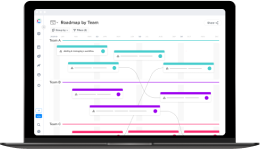
- A view that shows capacity by team, so a plan does not assume work nobody has time for
- The ability to zoom in and out between long-term direction and near-term delivery
- Filters and segments, so you can show a customer-facing subset without exposing internal detail
Craft.io builds its roadmap around connecting strategy to features, with OKR-based roadmaps and dashboards on the same data. You can see how that works on the roadmap page.
Sharing the roadmap with stakeholders
A roadmap that only the product team can open does not change how the company makes decisions. When you test sharing, check who can see what, and whether stakeholders can read the plan without learning a new tool or asking you for a fresh export every week.
Questions worth asking in a demo:
- Can you share a view with people outside the product team, and control what they see?
- Do stakeholders always see the current plan, or a snapshot that goes stale?
- Can leadership see progress without a separate status deck?
If you are still weighing how much time roadmap upkeep costs your team, our post on roadmaps that waste hours of your time is a useful read before you start comparing tools.
Connection to Jira and delivery tools
Most product teams plan in one place and deliver in another, usually Jira. The roadmap tool should sit above delivery and stay connected to it, so you are not retyping status or reconciling two lists by hand.
Check these points before you commit:
- Does the integration sync in both directions, or only push items out?
- When engineering changes the status of an item in the delivery tool, does the roadmap reflect it?
- Can you review the full list of supported integrations and the API before you buy?
Craft.io lists its connections on the integrations page. Ask any vendor you shortlist to show the live connection with a real project, not a slide.
Tracking the plan once work starts
The weak point of most roadmaps is what happens after approval. Plans shift, dates move, and a month later nobody can say what changed or why. A tool that only records the original plan gives you a pretty picture and no answer when leadership asks why a release slipped.
Look for a way to compare the plan you committed to against what is actually happening. Craft.io offers Actual vs Planned for tracking roadmap changes against the original plan, which gives product leaders a record to discuss instead of a memory.
A checklist to run in your trial
- Can one plan be shown in strategic, feature and capacity views without duplicate upkeep?
- Can you share a controlled view with stakeholders who do not use the tool daily?
- Does the Jira connection work with one of your real projects?
- Can you compare planned against actual once delivery begins?
- Does the tool cover prioritization and feedback, or will you need separate products for those?
- Do you understand the pricing model and what each plan includes? Check the pricing page.
- Is data security documented well enough to pass your internal review?
Run the same real roadmap through every tool you shortlist. A demo with clean sample data tells you little.
Making the business case for approval
If a Head of Product, VP Product or CPO approves the purchase, give them the argument in their terms, not feature lists. Three points usually carry it.
- Time. Estimate the hours your team spends each cycle rebuilding roadmap slides and status updates by hand, and what that time costs.
- Alignment. Show where decisions went wrong or stalled because stakeholders were working from different versions of the plan.
- Accountability. A planned-versus-actual record lets leadership see what changed and why, which supports better planning in the next quarter.
Use your own numbers for the hours and cost. Then compare the tool’s price against that figure. If you want a deeper look at how teams in your position have approached this, see the customer stories, or review pricing to put a real cost next to your estimate.
Frequently asked questions
What should a product manager look for in roadmap software?
Look for multiple views of one plan, controlled sharing with stakeholders, a working connection to Jira, and a way to track the plan against what actually happens once work starts.
Why does the Jira connection matter?
Most teams plan in one tool and deliver in Jira. A connected roadmap saves you from retyping status and keeps the plan and the delivery list from drifting apart.
How can I share a roadmap with people outside the product team?
Check that the tool lets you share a view with controlled visibility, so stakeholders see the current plan without needing a separate export or a status deck.
How do I track roadmap changes after work begins?
Use a tool that compares planned against actual. Craft.io provides Actual vs Planned for tracking roadmap changes against the original plan.
How do I make the business case for roadmap software?
Estimate the hours your team spends rebuilding roadmaps and status updates by hand, show where mismatched plans caused problems, and point to the value of a planned-versus-actual record for leadership.
What should I do in a roadmap software trial?
Run one of your real roadmaps and a real Jira project through every tool on your shortlist, rather than relying on a demo with clean sample data.