What’s the fastest way to get stakeholder buy-in on product decisions without creating more presentations?
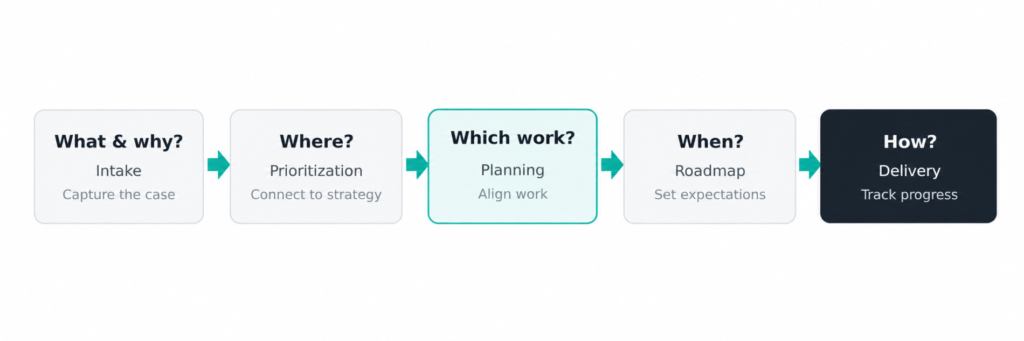
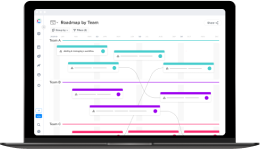
The fastest way to get stakeholder buy-in without building another presentation is to let stakeholders see the decision where it already lives: a shared roadmap or prioritization view that links each item to company objectives. In craft.io, that means connecting OKRs to initiatives, epics and features, so the reasoning behind a decision is visible to anyone with access. They do not wait for a meeting to find out why something ranks where it does.
The slow part of alignment is rarely the decision. It is the translation: exporting a roadmap into slides, rewriting priorities for each audience, then re-doing it when something changes. If the source of truth is shared and current, most of that work disappears.
Why decks slow product leads down
A product lead owns the roadmap and sits between user needs, business goals and engineering capacity. Every stakeholder cares about a different slice of that. Sales wants the feature a prospect asked for. Engineering wants a realistic scope. Leadership wants to see progress against company goals.
A deck freezes one view at one moment. By the time it circulates, priorities may have shifted, and you are context-switching between the planning tool, the feedback source, the spreadsheet and the slide editor just to keep the story consistent. Teams that rely on spreadsheets for this often hit the same wall, which is the problem our post on spreadsheets and product management covers.
The goal is not to skip communication. It is to stop rebuilding the same story in a new format every time someone needs to say yes.
What to put in front of stakeholders instead
Give each stakeholder the evidence they actually need to say yes, in a form that stays current:
- A roadmap tied to objectives. When items link back to OKRs, a stakeholder can see which company goal a feature serves without asking you. See how a roadmap connects strategy to features.
- A visible prioritization method. Built-in prioritization best practices show why one initiative outranks another, which turns “why not mine?” into a conversation about criteria. The prioritization tools page explains the approach, and the MoSCoW framework is a simple place to start.
- Real customer input. Feedback collected from users, or synced from existing data, gives sales and support a way to see their input reflected. See feedback management.
- Capacity that engineering agrees with. Capacity planning shows what each team can take on, so commitments match reality. More on capacity planning.
A lightweight routine that keeps approval fast
Fast buy-in comes from a repeatable habit, not a one-off push.
- Talk to the approvers first. A short one-to-one with the people who can block or fund a decision surfaces objections before anything is formal.
- Point them to the live view. Send a link to the roadmap or prioritized list instead of a file, so what they read matches what the team works from.
- Ask for a specific response. “Does this ordering conflict with anything on your side?” gets a faster answer than “any thoughts?”
- Record the outcome where the work lives. If the decision and its reasoning sit next to the items they affect, the next conversation starts from facts instead of memory.
For Heads of Product and CPOs, the business case is fewer hours spent producing alignment artifacts and fewer decisions reopened because nobody could find the reasoning. For teams newer to this, our guide on how to build a product roadmap is a practical place to start.
Stakeholder buy-in questions
What is the fastest way to get stakeholder buy-in without a presentation?
Share a live roadmap or prioritized list that links each item to company objectives, so stakeholders can see the reasoning themselves. Pair it with a short one-to-one conversation with the people who approve or block the decision.
Why do product decks slow down alignment?
A deck captures one view at one moment and has to be rebuilt whenever priorities change. A shared, current view removes the repeated work of translating the roadmap into slides for each audience.
How does craft.io help with stakeholder alignment?
craft.io lets you link OKRs to initiatives, epics and features, and build OKR-based roadmaps and dashboards. It also includes built-in prioritization best practices and capacity planning, so the reasoning behind decisions is visible.
How do I show why one feature ranks above another?
Use a visible prioritization method so the criteria are shared up front. That shifts the discussion from whose request wins to how the criteria were applied.
Does engineering need to be involved in buy-in?
Yes. Capacity planning shows what each team can work on, so commitments reflect what engineering can deliver and the roadmap is easier for everyone to support.