Product feedback management software: a buyer’s guide for product teams
What feedback software does that a survey tool does not
A survey tool asks questions and gives you a spreadsheet of answers. Product feedback management software does a different job: it keeps a running record of what customers and internal teams want, ties each request to the work on your roadmap, and tells the people who asked what happened next.
If your feedback lives in a survey export, a support inbox, sales call notes and a Slack channel, you do not have a feedback process. You have four piles. The software worth buying turns those piles into one list you can sort, group and act on. This guide covers what separates the two categories and gives a checklist a Head of Product can use before signing off on a purchase.
The four jobs feedback software has to do
Every tool in this category claims to manage feedback. Test each claim against these four jobs.
- Collect from many sources. Feedback arrives through a portal, support tickets, sales conversations, customer success notes and direct invitations to users. A tool that only accepts one channel leaves the rest in side spreadsheets. Craft.io lets you invite people to give feedback on your product or sync existing data, so what users really need ends up in one place.
- Group requests. Ten customers asking for the same thing in ten different phrasings should show up as one theme with ten votes behind it, not ten rows. Without grouping, volume is invisible and the loudest customer wins by default.
- Link requests to features. A request that is not connected to a feature, epic or objective cannot be prioritized or tracked. Linking is what turns raw input into roadmap input, and it lets you show a stakeholder which delivered item came from which request.
- Close the loop. The people who gave feedback should hear back when it ships, or when it is declined and why. This is the step most teams skip, and it is the reason customers stop contributing.
Evaluation checklist for a Head of Product
Use these questions in vendor demos. Ask to see each answer in the product, not on a slide.
- How many input channels can feed the same backlog, and which ones need manual copy and paste?
- Can duplicates be merged while keeping the count and the original submitters?
- Can a single request be linked to a feature, and can that feature be traced up to a company objective?
- Can you segment feedback by customer type or account, so one large customer does not drown out a pattern across many small ones?
- Does it connect to your delivery tools, such as Jira, so status updates flow back without retyping?
- Can you notify requesters when the linked item ships?
- Who can see what? Check that internal-only notes stay separate from anything customers can view.
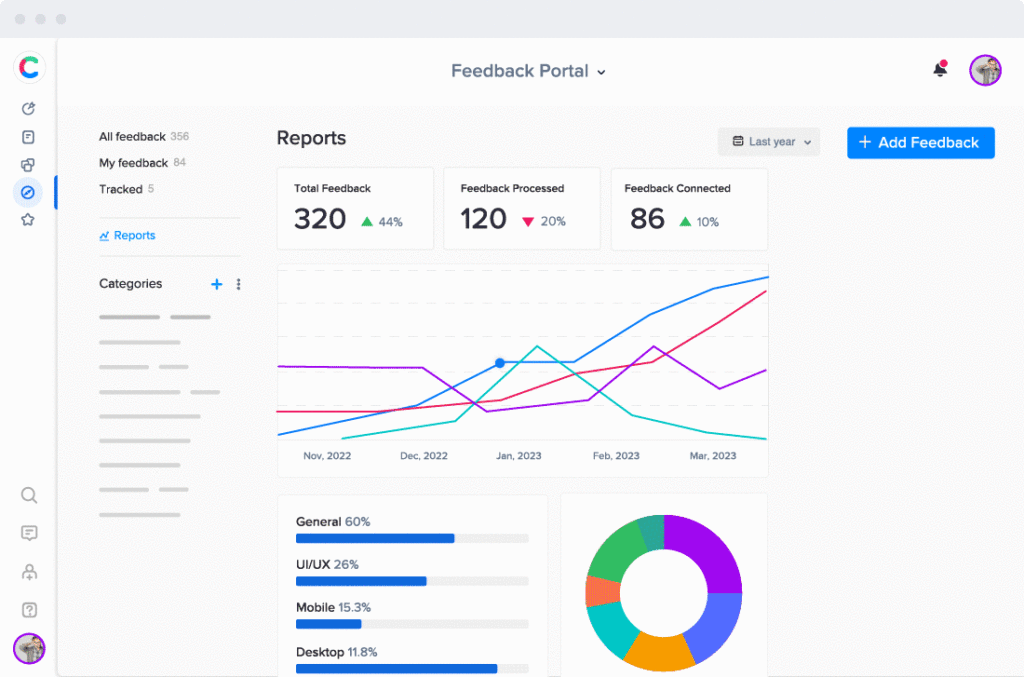
- What does reporting show you: top themes, trends over time, and the share of delivered work that came from customer input?
A tool that fails the linking question is a suggestion box, however polished its portal looks. A tool that fails the close-the-loop question will collect plenty at first and less every quarter.
Making the business case
The person who signs off wants to know what changes. Frame it around three outcomes. First, prioritization gets defensible: when a feature is chosen, you can point to the volume and type of requests behind it. Second, less time goes to reconciling spreadsheets, a problem the craft.io team has written about in why spreadsheets undermine product management. Third, customer-facing teams get a clear answer to the question they hear most: has anyone asked for this, and what is happening with it?
Also weigh whether feedback should live in a standalone tool or inside the same platform as your roadmap and prioritization. Separate tools mean another integration to maintain and another place where links between requests and features can break. Craft.io runs feedback, prioritization and roadmapping in one product, so a request can be traced to a feature and to the objective it supports.
Where to go from here
Start by auditing where your feedback sits today and counting the sources. That number tells you how much a unified tool would save you. Then run the checklist above against two or three vendors with a real sample of your own requests, not a demo dataset.
For a closer look at how craft.io handles collection, grouping and linking, see the feedback platform page. For tactics on running the process day to day, read tips for managing customer feedback and 7 useful tips to manage feature requests. If you are comparing the wider category before narrowing down, the top 10 customer feedback software solutions roundup is a useful starting list.
Frequently asked questions
What is product feedback management software?
It is software that collects feedback from many sources, groups similar requests, links them to features on your roadmap, and helps you tell requesters what happened to their input.
How is it different from a survey tool?
A survey tool gathers answers to questions you chose to ask. Feedback management software keeps an ongoing record of what customers and internal teams request, and connects each request to planned work.
Why does linking requests to features matter?
A request that is not connected to a feature or objective cannot be prioritized or tracked. Linking lets you show which delivered work came from which customer input.
What should I ask vendors in a demo?
Ask how many input channels feed one backlog, whether duplicates can be merged while keeping the count, and whether requests link to features and connect to delivery tools like Jira. Ask to see each answer in the product.
Should feedback live in a separate tool or with the roadmap?
A separate tool means another integration to maintain and another place where links between requests and features can break. Keeping feedback in the same platform as roadmap and prioritization avoids that.
Why is closing the loop worth the effort?
Customers who never hear back tend to stop contributing. Telling them when an item ships, or why it was declined, keeps the flow of useful input going.